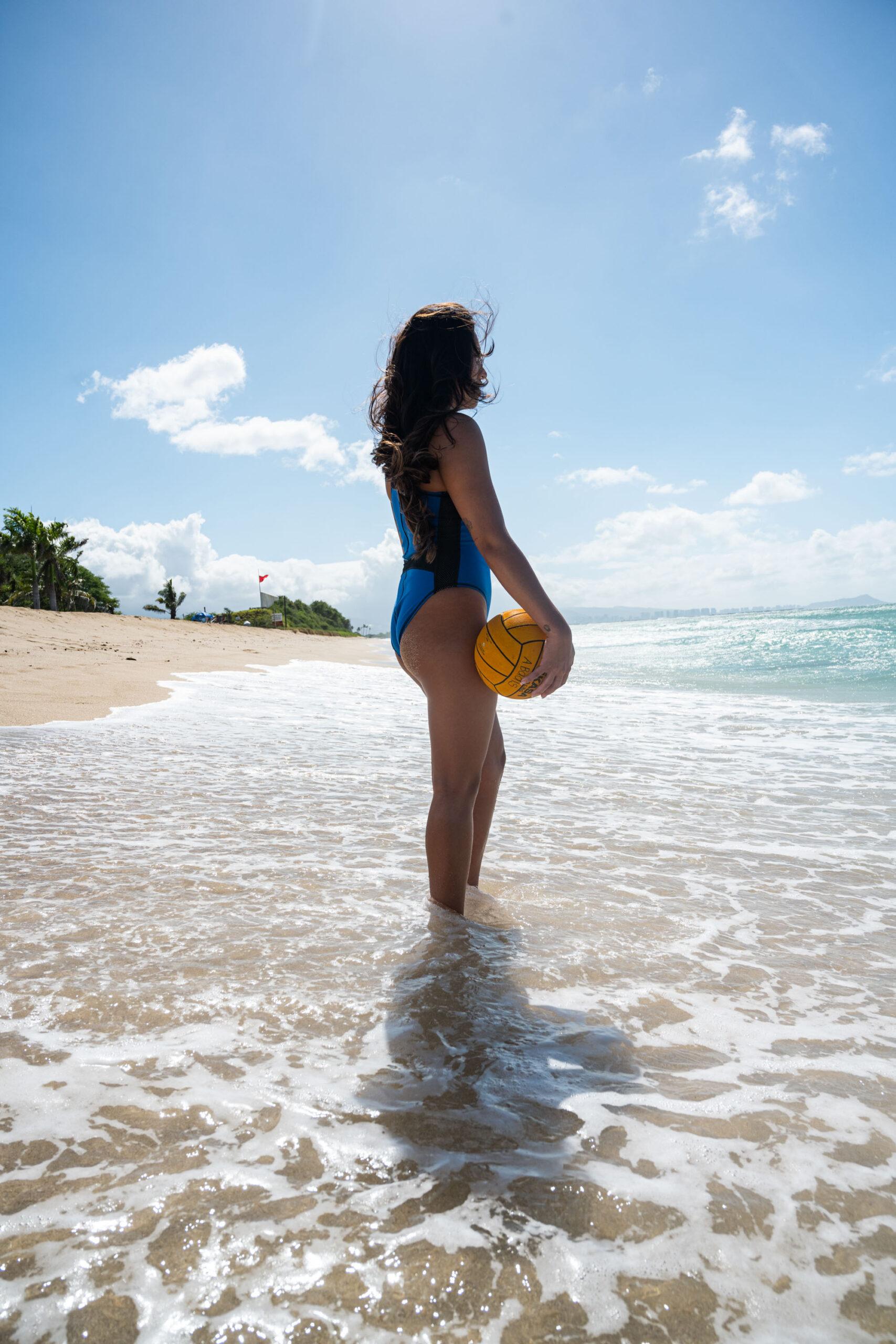
Off the leeward shore of Oahu, at a local beach fringed by palms, 18 teenage girls bobbed in the surf, trying to pass a water polo ball between foot-high swells. Eyes stinging with salt, spitting mouthfuls of brine, the players wondered when they would finally be able to practice in a pool.
The whitecaps and currents made one-handed passing drills ridiculous. Treading water, legs circling in opposite directions — the classic eggbeater kick — they had to take care not to scrape the coral reef. That could sandpaper off a layer of skin, leaving wounds that took forever to heal on athletes constantly in the water.
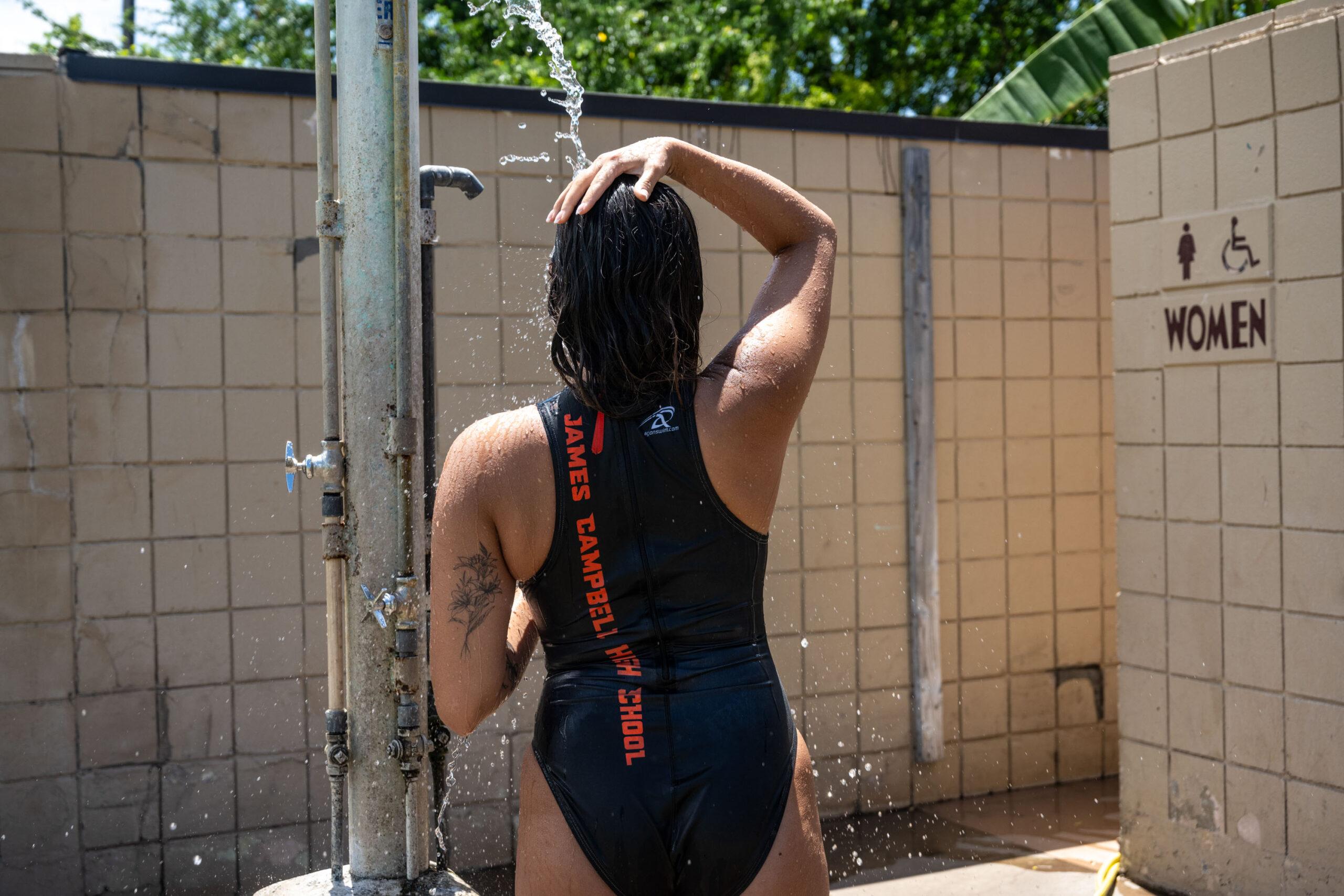
“This isn’t fair,” thought Ashley Badis, a soft-spoken junior with a rocket arm. Since her freshman year at James Campbell High School in Ewa Beach, the team had faced one delay or another in getting access to a pool. But water polo practice in the ocean? Absurd.
It was February 2018, and their first game of the season — a doubleheader — was less than two weeks out. They’d face teams that were able to properly train in a pool.
With around 3,100 students, Campbell was the biggest school in Hawaii. Its athletics teams, the Sabers, included a varsity softball team with four state titles. Like many public schools in the state, Campbell didn’t have a pool. Practice time at community pools should have been secured well in advance of the season, but their school had dropped the ball. Again.
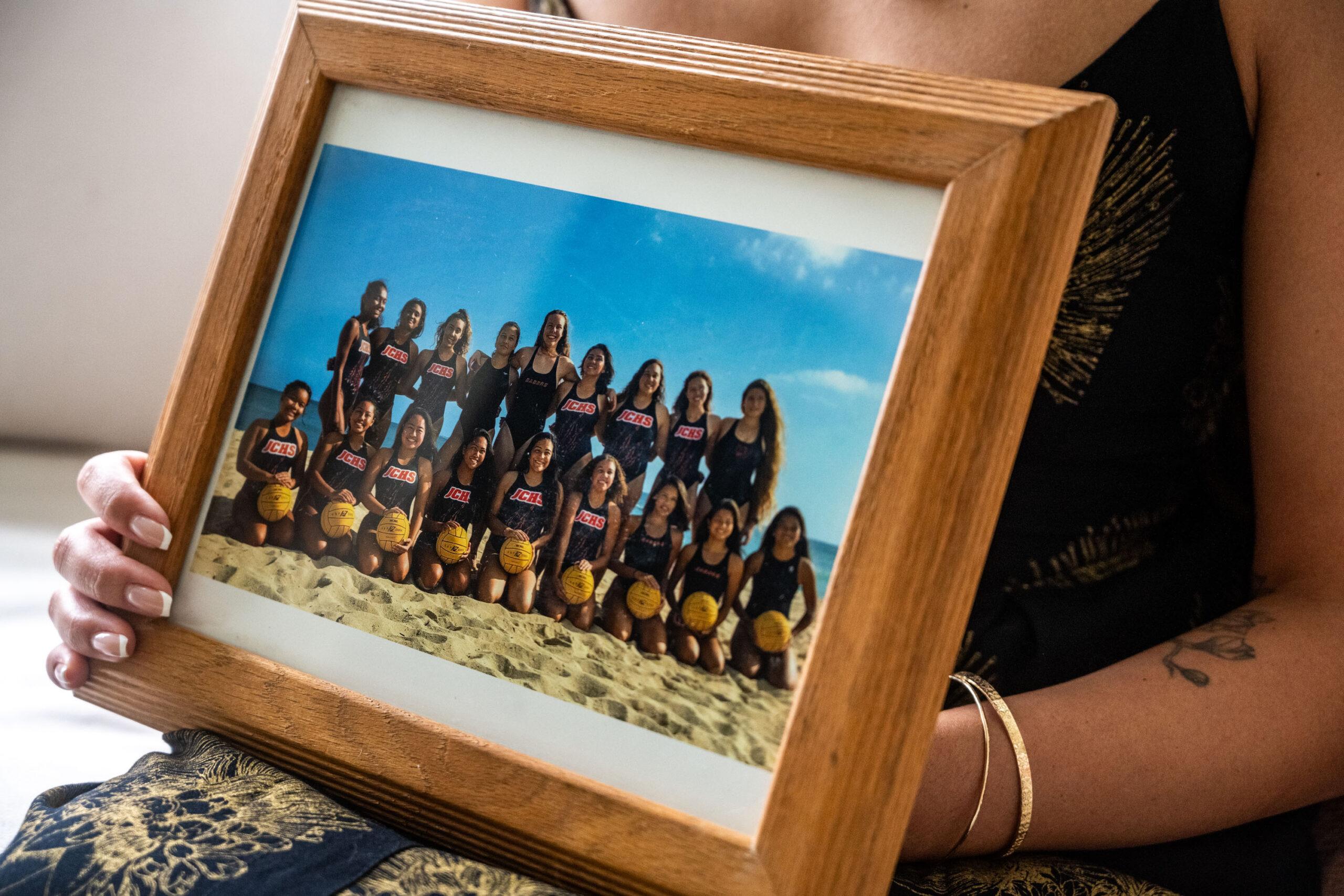
Anxious about the upcoming games, the team made do with the only body of water they had: the Pacific Ocean. A few blocks from school, in their suburban town of Ewa Beach, was a public beach where the local kids surfed. For weeks, the girls swam out past the break, where the waves wouldn’t crash overhead, and attempted to practice.
Between the wind and the waves and the lift of salt water, it felt like another game entirely. There was no goal to aim for, no boundary to mark the 2-meter defensive line. Still, ocean practice was better than dry-land drills on their knees in the sand, or tying resistance bands to a fence to strengthen their throwing arms. That’s what they had to do when the waves were too big or the riptides too strong to practice safely.
A few weeks earlier, the team had met at American Renaissance Academy, a private school that had offered to share its pool. But when the girls arrived, they were turned away because their school had failed to sign a contract. Embarrassed and disappointed, they packed up and went home.
Their head coach had resigned in November, and the school had failed to hire a new one. Ashley’s father, Dominic Badis, was an assistant coach, and he stepped up when no one else would. A firefighter, Dom was a suntanned surfer still built like a defensive back, the position he played in high school. Like so many parents in the history of youth sports, he agreed to coach a sport he’d never played so his kid could have a turn.
Ashley’s mother, Caron Badis, worked at a local hospital as a labor and delivery nurse. Ashley and her younger sister, Alexis, were shy, but Caron had instilled in them the importance of clear communication. She was the “comms mom” of the water polo team, the one who rounded up paperwork and ordered team swimsuits on time.

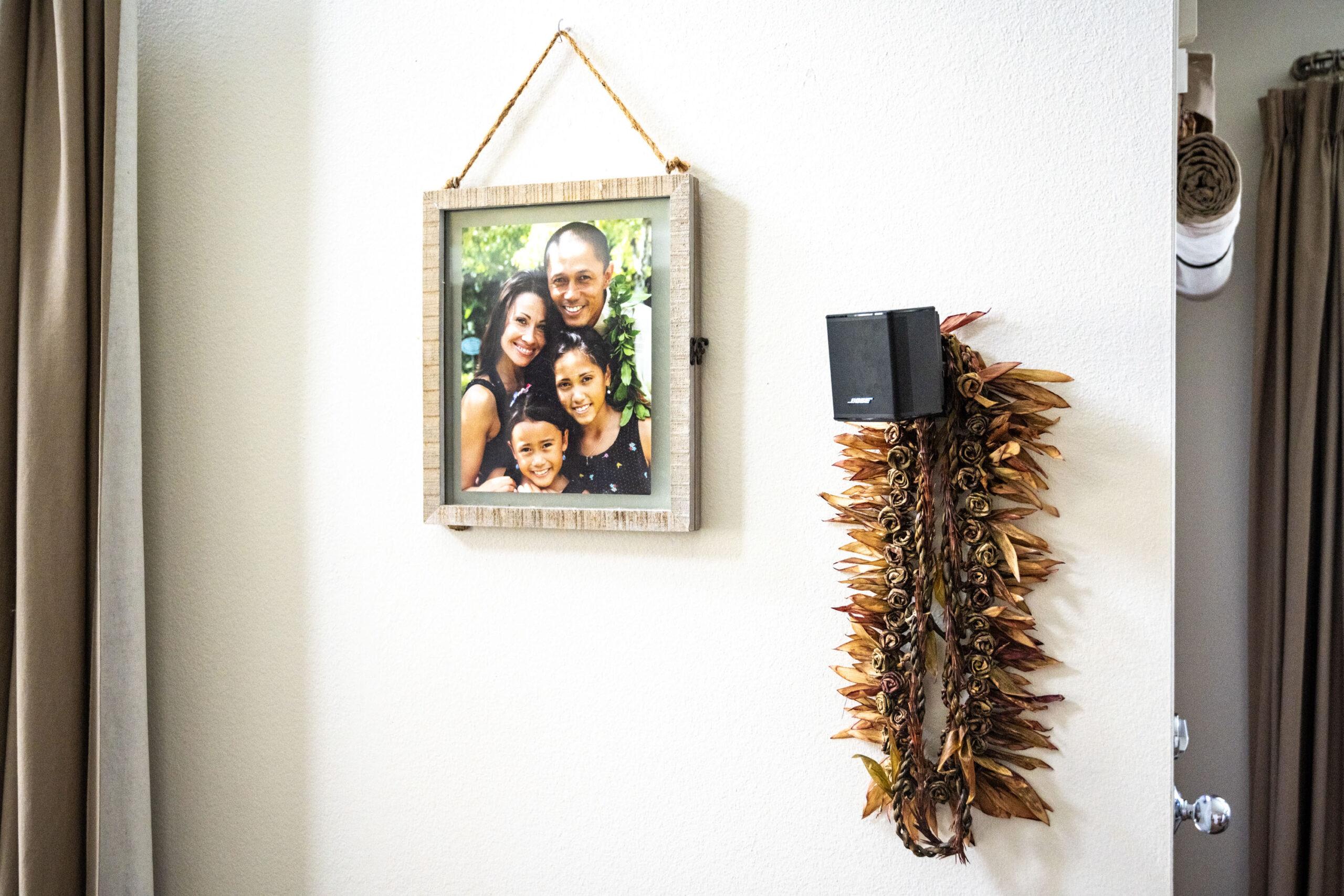
The week after the team was turned away from the pool, Caron was watching the TV news when she saw a story that made her lean forward. It highlighted unequal treatment of male and female athletes in Hawaii schools and mentioned a letter from the ACLU demanding the Department of Education (DOE) take immediate action to rectify the inequity.
She pulled out her phone and thumbed a quick search to find the ACLU letter. Two sentences with bolded words leaped off the page:
Simply put, it is unfair and illegal that the female athletes of Hawai‘i have been denied full, equal access to the DOE’s athletic programs for this long. Indeed, that this inequality persists today — nearly half a century after Hawaii’s own Congresswoman Patsy Mink succeeded in shepherding Title IX into law — is unconscionable.
Caron felt a twinge in her gut. She could tell this was important, but what was Title IX?
Made in Hawaii
Nearly 50 years earlier, in 1971, around 5,000 miles east of Hawaii, the first woman of color elected to Congress began drafting a bill. Patsy Takemoto Mink wanted a federal law to protect women from the roadblocks she’d faced on every step of her path to Capitol Hill.
Born on Maui in 1927 to Japanese parents, Patsy wondered why teachers laughed at her dream of becoming a doctor. In high school, she played half-court basketball because full-court was deemed “too strenuous” for girls.
As a premed student at the University of Nebraska, she was denied a room in a regular dorm because she wasn’t white. After graduating from the University of Hawaii, she was rejected by at least 10 medical schools, forcing her to pivot to law school. Every law firm in the islands that she approached refused to hire a Japanese-American woman, so she started her own firm before ultimately turning to politics.
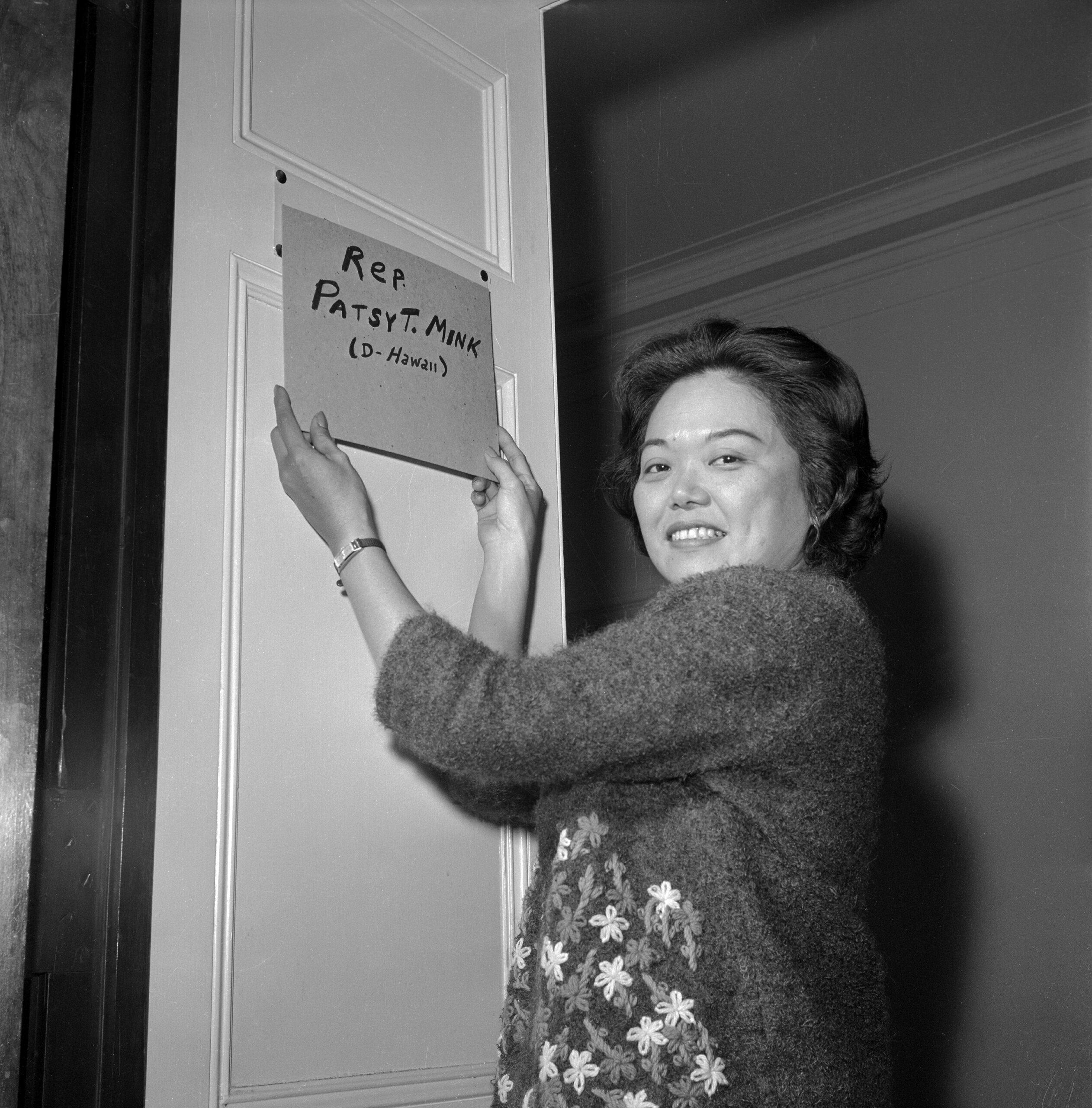
In Congress, Patsy faced a particular strain of disrespect as a woman of Asian descent. People called her “exotic.” A dragon lady. “She was denigrated and belittled by Asian female tropes,” recalls her daughter, Wendy Mink.
Patsy found an ally in Edith Green, a representative from Oregon who championed women’s rights. As chair of the House Subcommittee on Education, Green scheduled a hearing on discrimination against women in American schools. Over seven days of testimony in 1970, female college students, professors, and professionals told lawmakers how they were laughed out of programs, excluded from organized sports, and discouraged from pursuing the same academic and career goals as men.
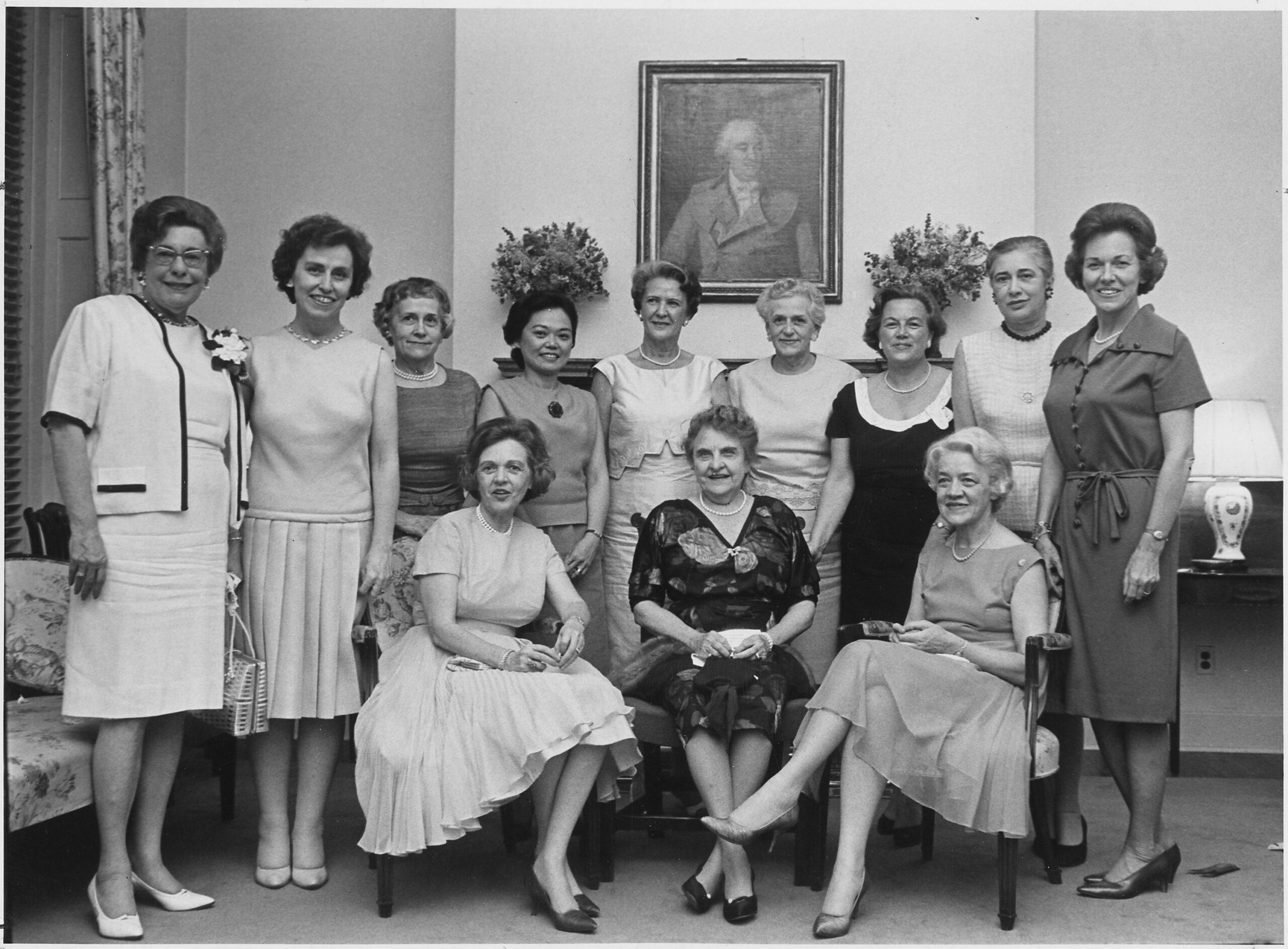
When Patsy stepped up to testify, she described what it felt like to face “one of the most insidious forms of prejudice extant in our nation.” She pointed out glaring inequalities in college admissions, scholarships, and hiring, noting, “Our nation can no longer afford this system which demoralizes and demeans half of the population and deprives them of the means to participate fully in our society as equal citizens.”
To change the system, they needed a federal law prohibiting unequal treatment of the sexes. It had to be legislation that 523 congressmen would vote for — or at least half of them — and that a paranoid President Nixon could sign into law without sparking controversy.
Achieving their goal required tactical political savvy. Patsy and Green were all too familiar with the ongoing saga of the Equal Rights Amendment (ERA), an explicit promise of equal rights for women under the Constitution. Suffragists had drafted it in 1923, three years after the 19th Amendment gave women the right to vote. It had been bandied about and revised for nearly half a century, and Congress was set to vote on it again soon.
To avoid a similar fate for their bill, Patsy and Green kept their law deliberately broad. They tucked a small but powerful clause into a long list of amendments, called titles. Their amendment, the ninth of eleven titles, mirrored Title VI of the Civil Rights Act of 1964, substituting “sex” for “race, color, or national origin.”
No person in the United States shall, on the basis of sex, be excluded from participation in, be denied the benefits of, or be subjected to discrimination under any education program or activity receiving Federal financial assistance.
Although it did not directly mention athletics, high school and college sports were implicitly captured by “any education program or activity.”
One of the most powerful federal laws protecting women’s rights, Title IX passed in Congress with bipartisan support. It was signed into law on June 23, 1972, with little friction or fanfare.
Speaking Up
Hoping to practice somewhere other than the ocean, Ashley recalls trying to talk to the principal, Jon Henry Lee. When she and her teammate, Tatiana “Tati” Troup, visited his office, he wasn’t available. They dropped by repeatedly, she says, but he never seemed to be there. They tried to find Sam Delos Reyes, the athletic director, but they couldn’t scare him up either.
Yet two days later, on Feb. 22, the principal emailed the athletic director: “The DOE’s Civil Rights Compliance Office would like to meet with female athletes of each of our sports this coming Monday.” They needed a list of names by the following day. The athletic director forwarded the email to coaches, adding: “Assistance is NEEDED!”
Dom got the email, but only because he was a coach. He wondered why the other parents weren’t being informed. It struck Caron as “a bit sneaky.” She worried the girls would be intimidated or vulnerable to manipulation.
“This can’t be legal,” Caron thought. Recalling the TV news, she dialed the ACLU office in Honolulu and left a message: “I think this meeting has something to do with the letter you sent to the Department of Education.” When lawyers called her back, she explained the situation. “There’s got to be something you can do to help us,” she said.
It was decided that two ACLU lawyers would attend the meeting as legal representation for the girls, but they’d have to notify the school in advance. Shortly after they did, the meeting was rescheduled — for the day before the first game of the water polo season.

Hail to the Queen
When it was signed into law in 1972, Title IX marked the height of the women’s movement — three months after the ERA, seven months before the Supreme Court decision legalizing abortion in Roe v. Wade. Its passage would be a point of pride for Hawaii for years to come.
Long before it became the 50th state, Hawaii was a pioneer in equal rights legislation. A former Polynesian kingdom with a matrilineal society where land, rank, and possessions were passed down through the female bloodline, its last ruling monarch was not a king, but a queen. In 1893, Queen Lili‘uokalani had been illegally overthrown to block her plans for a new constitution that would restore rights to Native Hawaiians and limit the rights of white businessmen.
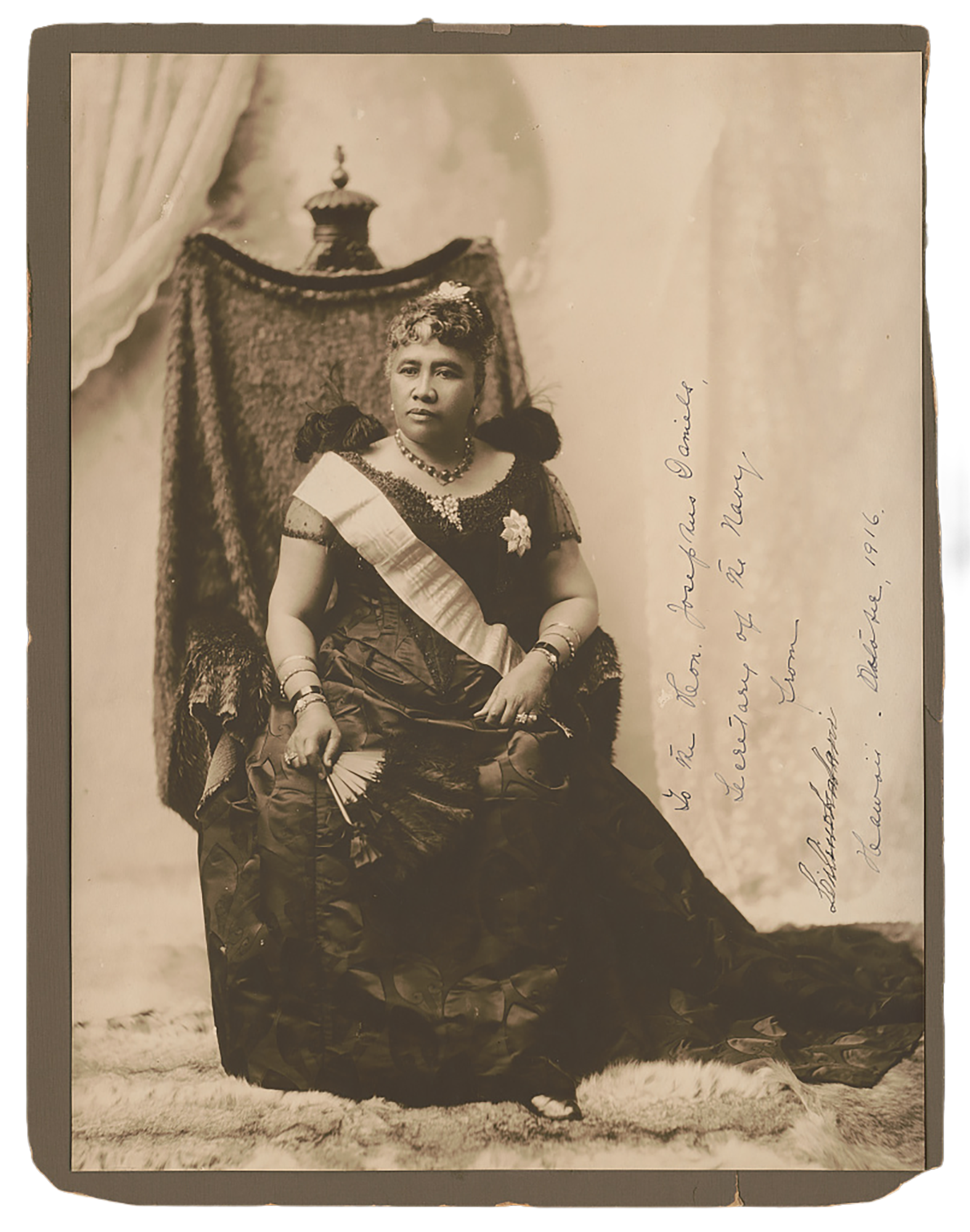
In 1950, nine years before the Hawaii Territory achieved statehood, lawmakers there revised its territorial constitution, adding language prohibiting discrimination based on race, religion, sex, or ancestry. Gender discrimination was illegal on the islands 14 years before the Civil Rights Act, and 22 years before the ERA and Title IX.
In 1970, Hawaii became the first state to legalize abortion — three years before Roe v. Wade. In March 1972, it became the first state to ratify the ERA — within hours of it being passed by Congress. The amendment was never formally adopted on a federal level because of legal debates concerning states’ ratification of the proposal, but Hawaii added its own ERA to the state constitution a few months later.
By the time Title IX was signed into law on June 23, 1972, the women of Hawaii were more than ready. In a matter of months, the first generation of Title IX athletes was playing volleyball and running track at the University of Hawaii. Women’s basketball, golf, swimming, and diving teams debuted the following year. Those early Rainbow Wahine (the Hawaiian word for “women”) would go on to become influential coaches, athletic directors, lawyers, administrators — and lifelong Title IX activists.
The first Rainbow Wahine athletics director, Dr. Donnis Thompson, was a pioneering Black woman who would one day be inducted in the Hawaii Sports Hall of Fame for championing the rights of female athletes. Thompson was a national shot put champion and later a women’s track and field coach in Hawaii. She had also worked closely with Patsy Mink during the drafting of Title IX.
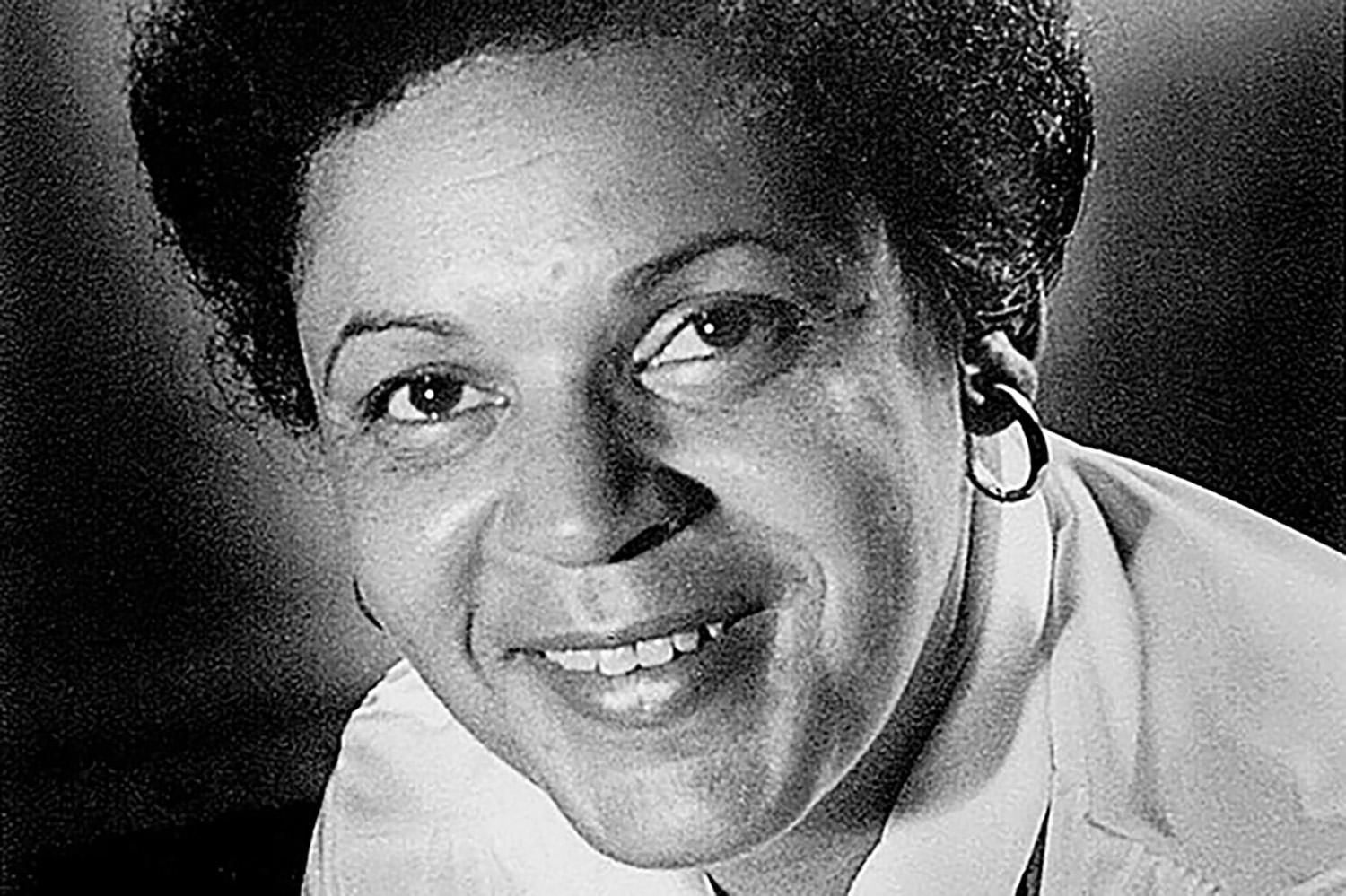
“It was one of the great things in my life to work with Patsy Mink,” she told Hawaii News Now. “Title IX… is probably the most outstanding piece of legislation since getting women to vote.”
Teamwork
On Feb. 26, 2018, a week before Campbell’s first water polo game, the players and their parents filed into a classroom after school. The principal and athletic director had finally agreed to meet with them.
“Every school in the state of Hawaii is playing water polo in a game or a tournament already,” one angry dad said. “We haven’t even touched the water yet.”
They weren’t asking for much: pool time and maybe some new caps, because their existing ones were so old they fell off and strangled the girls in the water. Why did they have to buy their own swimsuits when the school supplied the boys’ football team with nice uniforms?
Ashley, recording the meeting on her phone, was discouraged. “We’re asking for the bare minimum,” she thought.
Excuses unspooled in bureaucratic loops. The pool could not be booked without a head coach. But here was Dom, the new head coach, so why couldn’t they get it now? “Paperwork.” Dom hadn’t completed the paperwork to be the head coach.

“My husband was an assistant coach the last two years,” Caron said. “And never once was he ever told to fill out any paperwork.” More to the point, Campbell failed to hire a new head coach. “It’s your responsibility,” one of the players told the administrators. (Principal Lee and Delos Reyes, the athletic director, did not reply to requests for an interview.)
Then the principal suggested checking the league’s bylaws. “If there is a law that we have to have official tryouts, we don’t do it and we get reported, that could mean we could be forfeiting the entire season,” he said. The team’s discouragement turned into shock, and the shock flamed into anger. Ashley says she heard it as a veiled threat to cancel the season.
Through tears, one teammate’s mother offered a temporary solution: guest passes to a community pool. “I will pay for every single kid’s pass,” she said, voice cracking. “Why can’t we get a guest membership, just for an hour, and have tryouts?”
One of the girls addressed the school administrators. “You keep talking about taking steps and supporting the female athletics at our school. Right now we’re hearing a lot of things, but we’re not getting anything done.”
That brought Ashley’s blood to a boil. Were their school leaders even listening? Maybe they just didn’t care. The athletic director struck her as dismissive and aloof, and the principal seemed more concerned with defending him than helping her team.
“This is really upsetting,” Caron said. “Is this a girl thing? Title IX… is that what they fall under? I feel like I need to call the ACLU and update them on what’s been happening here.”
There. Someone finally said it. Something major had shifted. It was no longer a matter of school bureaucrats arguing with parents.
It was a matter of federal law.
Title IX on the Line
On July 16, 1975, three years after the passage of Title IX, Patsy Mink stepped into the House Chamber knowing her law was in danger of being gutted. As Wendy later described in an oral history about her mother, “The future of equality in some large way was on the table that day.”
When Congress had voted on Title IX in 1972, it passed with little friction. But when it came time to enforce the law with regulations in 1975, controversy erupted over whether the clause “any educational program or activity” applied to women’s sports.
That’s when the NCAA and college alumni — especially those from institutions that boosted men’s sports — “erupted in opposition,” Wendy said.
Opponents feared that women’s gains would come at the expense of men’s programs. Conservatives wanted to protect male college sports, and they fought to limit the scope of Title IX by excluding physical education and athletics. Congress had retained the ability to veto the regulations before they went into effect, and conservatives were now pressuring the Department of Health, Education and Welfare — the precursor to the Department of Education — to exclude athletics from Title IX.
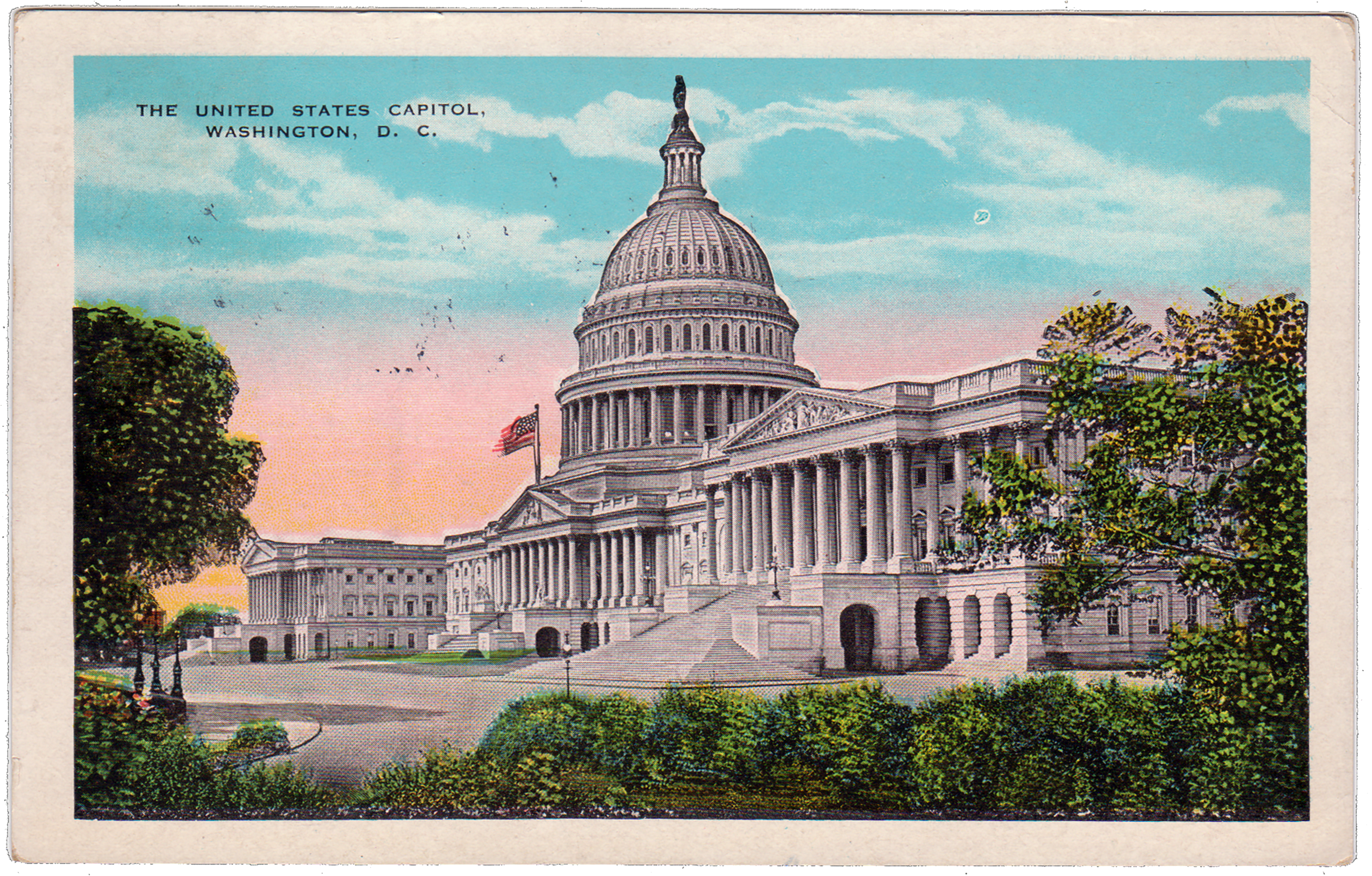
“That meant having to fight against every amendment that emerged in the House and Senate to all kinds of bills — riders that would prohibit Title IX from applying to athletics or prohibit Title IX from co-educating phys ed classes, and all down the line,” Wendy said. Her mother was beset on all sides.
That day in July, the House was slated to vote on an amendment that would exclude athletics from Title IX protection. Just as voting commenced, Patsy was pulled off the floor for an emergency phone call. Wendy, then 23, had been in a serious car accident in Ithaca, N.Y.
“Go, go, go!” Patsy’s colleagues said. “Go take care of your daughter!” Before she had a chance to cast her vote, she dashed out of the Capitol, joined her husband, and caught a plane to Ithaca.
In her absence, the amendment passed by a single vote: 212 to 211.
Wendy was hospitalized but in stable condition. While there, Patsy got word of the vote. It left her deflated. As Wendy later recalled, “It looked like the end of the scope of equality that Title IX eventually came to promise.”
But it wasn’t the end. Two days later, Patsy returned to Washington. Given the emergency circumstances of her departure, the Speaker of the House suggested a revote. This time, the scales tipped in Patsy’s favor with a vote of 216 to 178.
“This was the Rubicon for Title IX,” Wendy recalled. “If the executive branch regulations that included athletics as a gender-equity issue were beaten back by the conservative forces — the sexist forces, really — then Title IX would have been very narrowly applied and would not have been the kind of robust equality weapon it became.”
Speaking Out
The day before their first water polo game, members of the team prepared to sit down with girls from other teams to talk to Hawaii’s Department of Education. The DOE was sending a Title IX specialist and a compliance expert from its Office of Civil Rights, the agency that enforces Title IX.
Many of the girls had learned of the DOE meetings through whispers. They didn’t know what they were getting into, or all that was at stake. “It felt like we were getting thrown into it blindly,” Ashley says.
Most of the girls had never heard of Title IX. They didn’t know their rights, or that school leadership might be breaking the law. They did know they felt like second-class citizens.
Caron told Ashley not to downplay the disparities she saw between boys’ and girls’ sports at Campbell. Everyone needed to speak openly and give concrete examples. Ashley spread the word: “Tell them everything. Don’t hold back.”
Over the course of three meetings, small groups of captains and cocaptains had a recorded roundtable conversation with the women from the DOE. Caron and other parents sat in as silent observers, along with ACLU lawyer Wookie Kim.
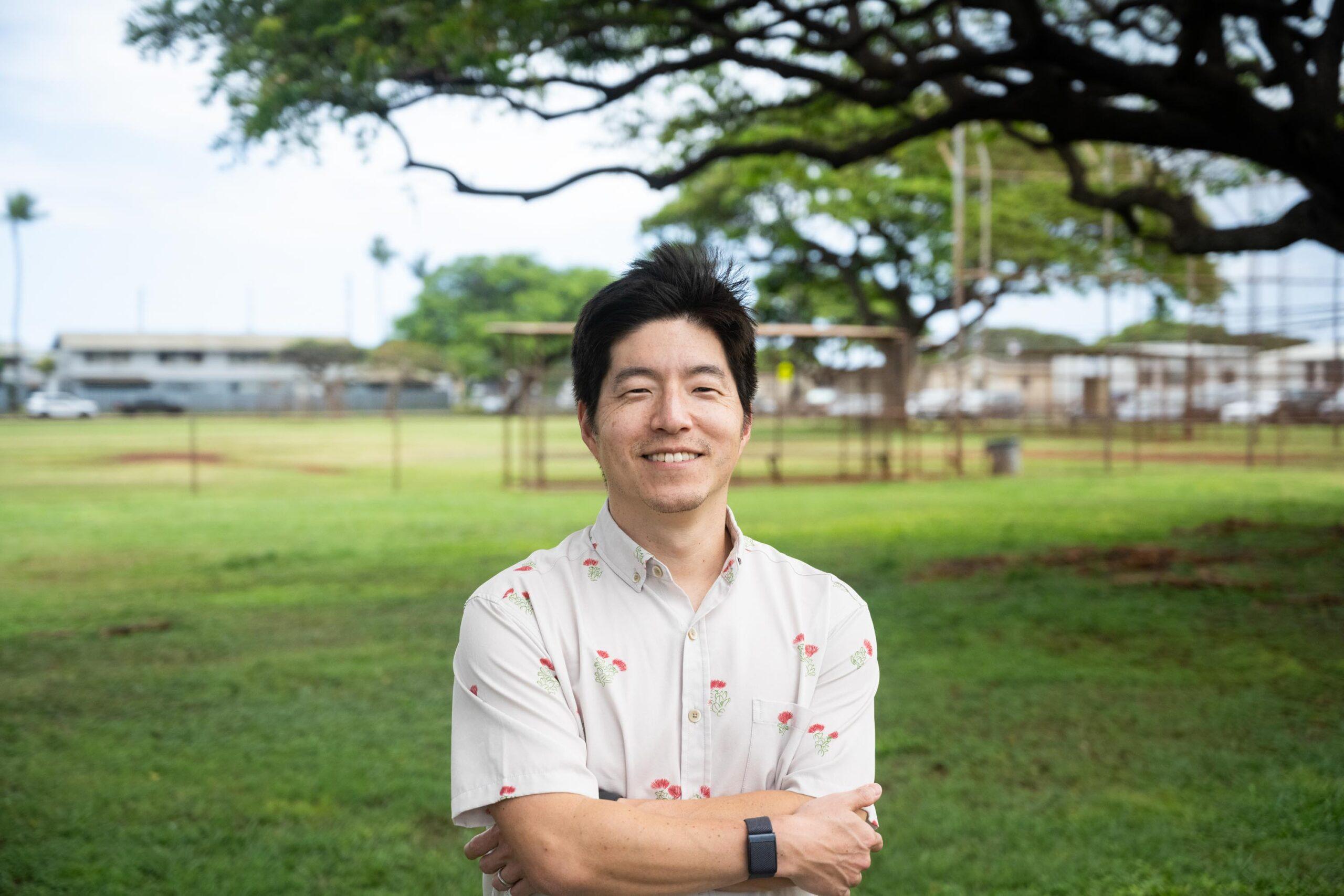
The DOE women explained the purpose of the meeting: “To see how we can better support not just this school, but other schools, and how we can support the athletes statewide.” Then they began asking questions:
“What types of locker rooms do you guys have here?”
The girls erupted in giggles. “None!”
“Where do you guys change?”
First choice: bathrooms, but get in line. Second choice: in a teacher’s closet. Other choices: in the cafeteria (behind tables, to hide from security cameras), in the hallway, on the bleachers, in a car, behind jackets held up by friends, or in the restroom at Burger King.
No locker rooms meant no place to store gear. Softball players lugged their equipment to class in duffels so big they were nicknamed “body bags.” Cheerleaders had nowhere to keep their mats and no set place to practice.
In contrast, the boys’ baseball team had a manicured diamond, a dugout, locker rooms, and a clubhouse, whereas the girls’ softball team had a scruffy field. No dugouts. No batting cage.
“Are there any services or facilities that males utilize that aren’t available to the females?” the DOE asked.
“Bathrooms.”
“What do you mean?”
“In the boys’ locker room, there’s a bathroom. It’s always open. But we either have to run back to the gym or to another building. Or there’s Porta Potties.”
“Or we go to Burger King.”
The specialists were confused. Back to Burger King? Not to change this time, but to actually use the bathroom? Yes, the girls replied.
Ashley was flabbergasted. It wasn’t just the water polo team. The disparities were so obvious. The DOE women had to see it. How could they not? She found their comments dismissive, their questions a bit leading. It was one thing to be ignored by male administrators. But women? She felt betrayed.
“It’s not fair,” one girl said.
“We just feel like it would be fair for all of the girls that are athletes at the school to get the same kind of facilities that the boys have,” said another.
“We’re really glad you guys are here. But we need the help, and we need to be listened to.”
Another girl said she worried that speaking up would lead to retaliation. But that didn’t stop her, or the other girls, from believing in what they were doing and why.
“I hope this changes things.”
“And this is not just for us now.”
“It’s for the girls behind us.”
They were only teenagers, but the world had already taught them the risks of speaking out. At the same time, they grasped something that often escapes adults: Real progress takes generations.
Backlash
After Patsy Mink won the 1975 fight to ensure that Title IX wasn’t gutted, change in the sports world began to accelerate. As girls’ and women’s teams were created across the country, female athletes began appearing in spaces previously reserved for men.
That moment “precipitated a culture war like no other,” says Donna Lopiano, former CEO of the Women’s Sports Foundation and one of the nation’s top Title IX experts. Some people even claimed Title IX would cause the death of big-time football.
Backlash was heard from coast to coast and at all levels of play, from rural public high schools to Ivy League colleges. No legal protections against retaliation existed at the time. Often the only leverage female athletes had was bad publicity.
One of the most movie-worthy examples played out at Yale University. Thanks to Title IX, a women’s crew team was established there in 1976. Instead of welcoming the women as colleagues, the men’s crew team called them “sweat hogs” and tried to bully them out of the weight room.
“This is our equipment,” the male captain told the women’s captain, who was working out with her teammate. “Not for girls.”
“I see, boys,” said Chris Ernst, lifting weights with Ginny Gilder. (Both were future Olympians.) “So you must pay more tuition than we do?”
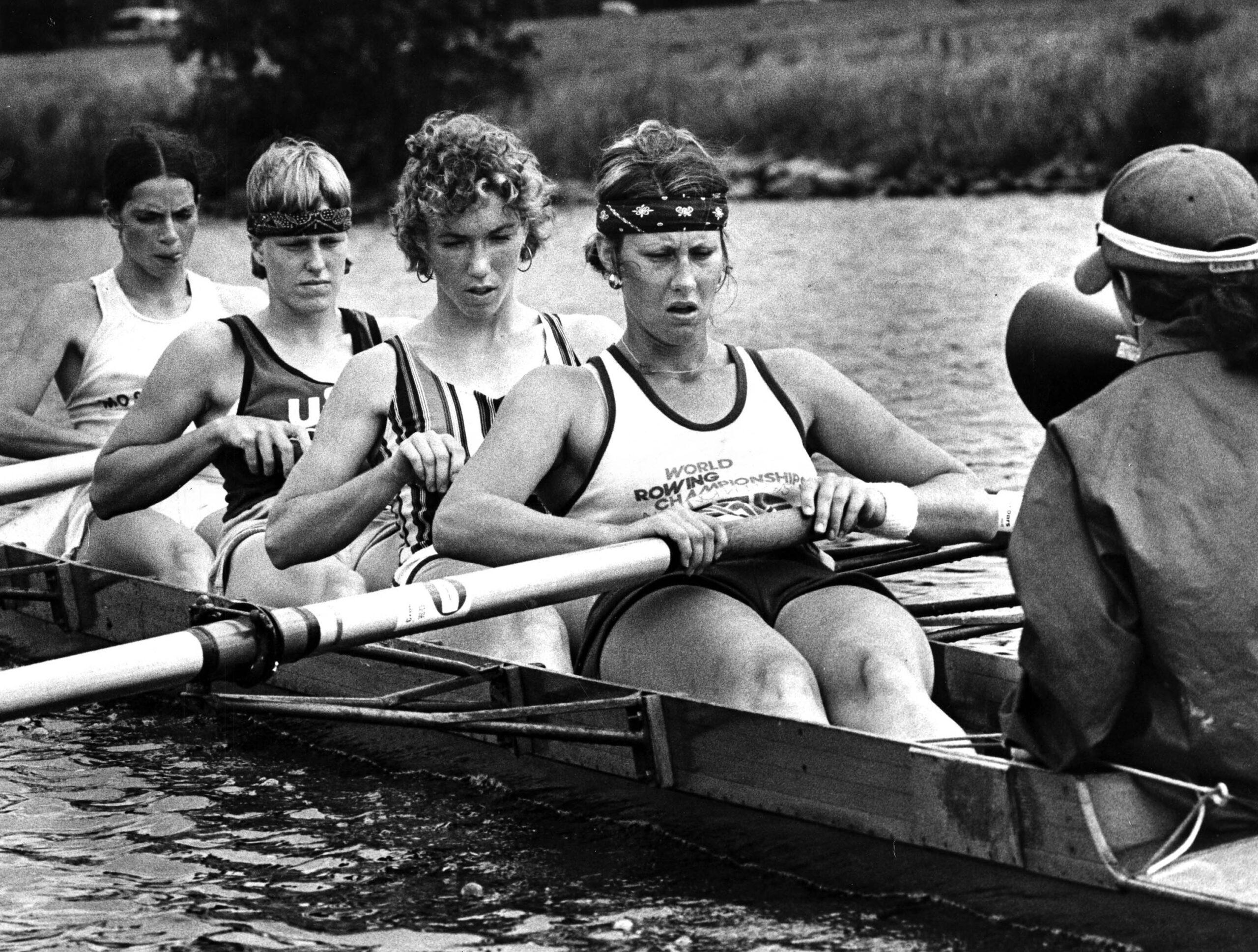
Both crew teams shared a boathouse, but only the men had a locker room. The women had a single toilet for the whole team. After practice, the men warmed up in hot showers while the women sat on the bus for half an hour, the ice on their clothes melting and merging with their sweat. They’d ride together back to campus, where the women didn’t have time to shower and change before the dining halls stopped serving dinner.
The women had repeatedly petitioned Yale for a locker room. After so many empty promises, they decided it was time to protest, and invited a Yale Daily News photographer and a New York Times stringer to follow along.
One cold day in March 1976, the team marched into the office of Joni Barnett, the director of women’s intercollegiate sports at Yale. Crew captain Ernst gave a nod. The rowers turned their backs, stripped off their sweats, and stood in silence. Naked. Spelled out on their bare backs and chests in Yale-blue marker was a message: TITLE IX.
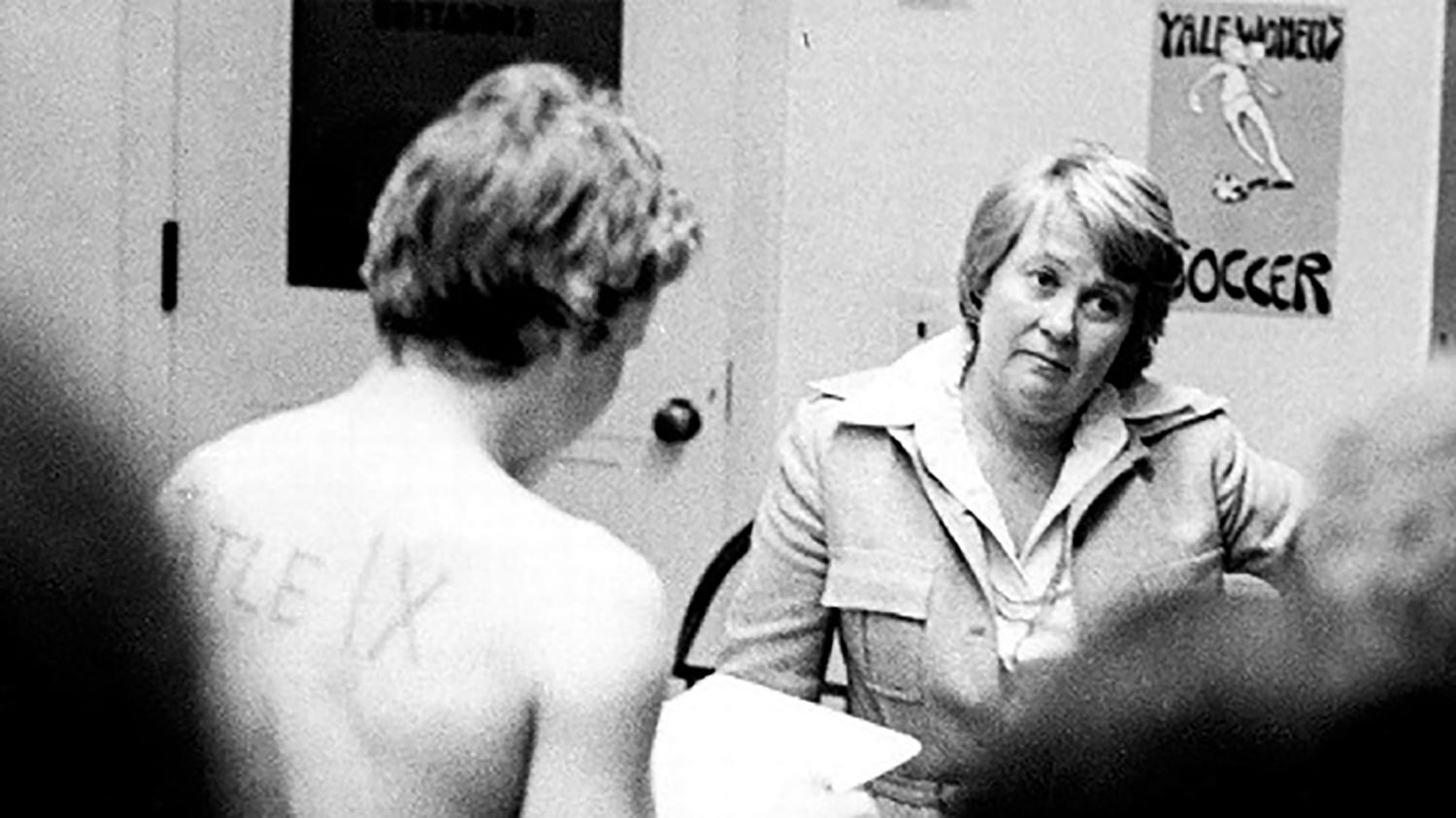
“These are the bodies Yale is exploiting…” the captain read from a handwritten statement. “We have come here today to make clear how unprotected we are, to show graphically what we are being exposed to… No effective action has been taken and no matter what we hear, it doesn’t make these bodies warmer, or dryer, or less prone to sickness.”
“Yale Women Strip To Protest a Lack Of Crew’s Showers,” ran the headline in the New York Times. One week later, another headline followed: “Yale’s Women Crew To Get Locker Room.”
The following year, Sports Illustrated reporter Melissa Ludtke was covering the 1977 World Series at Yankee Stadium. As they did after every game, a throng of sportswriters followed the players into the locker room for the customary postgame interviews. Ludtke, the only female reporter, was stopped at the door. No women allowed. She had to file a lawsuit just to do her job, and the subsequent ruling kicked open a door that had been closed to women.
As Ludtke, the Yale women’s crew team, and generations of women would continue to discover, equal access under the law doesn’t guarantee equal access in practice.
The federal government has an agency to enforce civil rights laws like Title IX: the Office of Civil Rights (OCR). Created in 1979, the OCR is part of the DOE and exists to stop educational institutions that receive federal funds from discriminating on the basis of sex, race, or disability.
But the OCR’s track record of resolving Title IX complaints in a timely fashion is now abysmal. The OCR is legally mandated to resolve 80% of complaints within 180 days, but it has struggled to do so for more than a decade. The volume of complaints has more than doubled since 2015, and the staff hasn’t grown accordingly. In March 2025, half that staff was eliminated. Those who didn’t lose their jobs went from handling dozens of cases to hundreds.
“They’re being asked to do the impossible,” says Linda Mangel, a former director of enforcement who worked at the OCR for 15 years. “Before March 2025, OCR staffing was already stretched beyond capacity to promptly resolve complaints; now it is altogether broken.”
That places the burden on women and girls to find another avenue. In the past, exposure and bad publicity could sometimes shame their schools into compliance. Nowadays, bad press evaporates in the chaos of the 24-hour news cycle.
So the fight to enforce Title IX has, by necessity, moved to the courts.
Exposure
The water polo team meeting with Campbell’s principal and athletic director changed nothing for the players, and they launched into the season without a single pool practice. At that first doubleheader, they lost both games. Defeated before they even had a chance.
Instead of getting help, they encountered more roadblocks. The day after that contentious meeting at the school, Dom says he was told, again, that the team was ineligible to compete because half the players’ paperwork was missing.
That’s when Caron knew something was up. “Retaliation,” she thought. They were being punished for speaking out. Ever the “comms mom,” Caron had made copies of the medical forms and liability waivers before turning them in. She’d had a feeling something like this might happen.
Before all the meetings, before calling the ACLU, fed up with being ignored by the school, Caron had tried going up the chain of command, repeatedly calling the DOE’s top official, the superintendent. After multiple calls were ignored, she left a final message: “If you do not call me back, I will seek legal action.”
Her messages were never acknowledged. When she spotted the superintendent across the room during Ashley’s meeting with the DOE, she introduced herself. Within earshot of Wookie Kim, Caron asked the superintendent why she never returned any calls. The superintendent tried to wave the ACLU lawyer away, saying it was a private conversation.
“Wait. Are you talking to Mr. Kim?” Caron recalls saying. “He’s with me. He has every right to hear this entire conversation.”
The ACLU’s involvement gave teeth to Caron’s complaint. The DOE could no longer afford to brush aside the water polo team without risk of a lawsuit. Caron didn’t know about the OCR (or its backlog), so it was a stroke of luck that she had seen the news story about the ACLU letter. Calling them in changed everything.
The ACLU first learned of the problem through an article in the Honolulu Civil Beat, a local nonprofit newsroom. An education beat reporter named Suevon Lee had heard about it while covering a House Education Finance Committee meeting.
In the meeting, elected official Matt LoPresti, the representative for Ewa Beach, told the committee about an angry dad who complained to him about the lack of girls’ locker rooms and other disparities at Campbell High. LoPresti asked the state for funds to build equitable facilities for girls, adding, “I don’t understand how there hasn’t been a lawsuit on this yet.”
Lee (no relation to Campbell’s principal Lee) visited Campbell, scoured budgets and public records, and interviewed parents, officials, and athletes. She was appalled when girls told her they drank less water during practice so they wouldn’t have to worry about finding a bathroom. On the hot, dry, leeward side of the island, doing so posed serious health risks.
Lee’s Feb. 7, 2018, story ran with the headline: “Female Athletes Get the Short End of the Stick at Some Hawaii Schools.” It caught the attention of the ACLU lawyers, who zeroed in on an egregious fact: Campbell High was only one of 14 schools in the state without athletic locker rooms for girls.
Two days later, the ACLU hand delivered its demand letter putting the DOE on legal notice. “We look forward to working with DOE towards an amicable resolution of this matter,” it said. “However, if we are unable to come to an agreement, the ACLU of Hawaiʻi is prepared to take legal action — as we have done before — to ensure that Hawaii’s female athletes are no longer denied the equal opportunities and access to which they are entitled under the law.”
It wasn’t the first time the ACLU had sued the DOE for Title IX compliance. In 2010, they sued the County of Maui on behalf of three high school softball players. According to the ACLU’s statement, the softball team had been “relegated to a rock-strewn dirt field a mile away” from the stadium where the baseball team practiced. In less than a month, the parties reached a settlement that included $1 million from the governor’s office to build a new softball field and $75,000 in attorney fees.
Eight years later, the ACLU was back, again suing Hawaii’s DOE over Title IX compliance.
Keeping Score
History has shown, repeatedly, that unless responsible parties are held to account, progress backslides. Enforcement, however, is complicated.
Title IX has a detailed list of requirements for compliance, a matrix of factors beyond counting players and sizing up fields. Proving a school is out of compliance requires very specific data. These metrics — such as the scheduling of games and practice times, access to weight rooms, and publicity — are not always tracked. Ironically, the possibility of a lawsuit can deter school officials from collecting this information, especially if it could be used to prove they aren’t doing their jobs.
Unless it’s required by law.
Hawaii has a law that does just that, specifically at the high school level. Just as Hawaii had added an Equal Rights Amendment to the state constitution in concert with the federal ERA, the state also has legislation that aligns with Title IX: the Gender Equity in Athletics law.
That bill was authored and championed by Jill Nunokawa, a public defender and civil rights specialist at the University of Hawaii. In addition to being a women’s rights advocate, Nunokawa was an early Title IX athlete — a Rainbow Wahine basketball player.
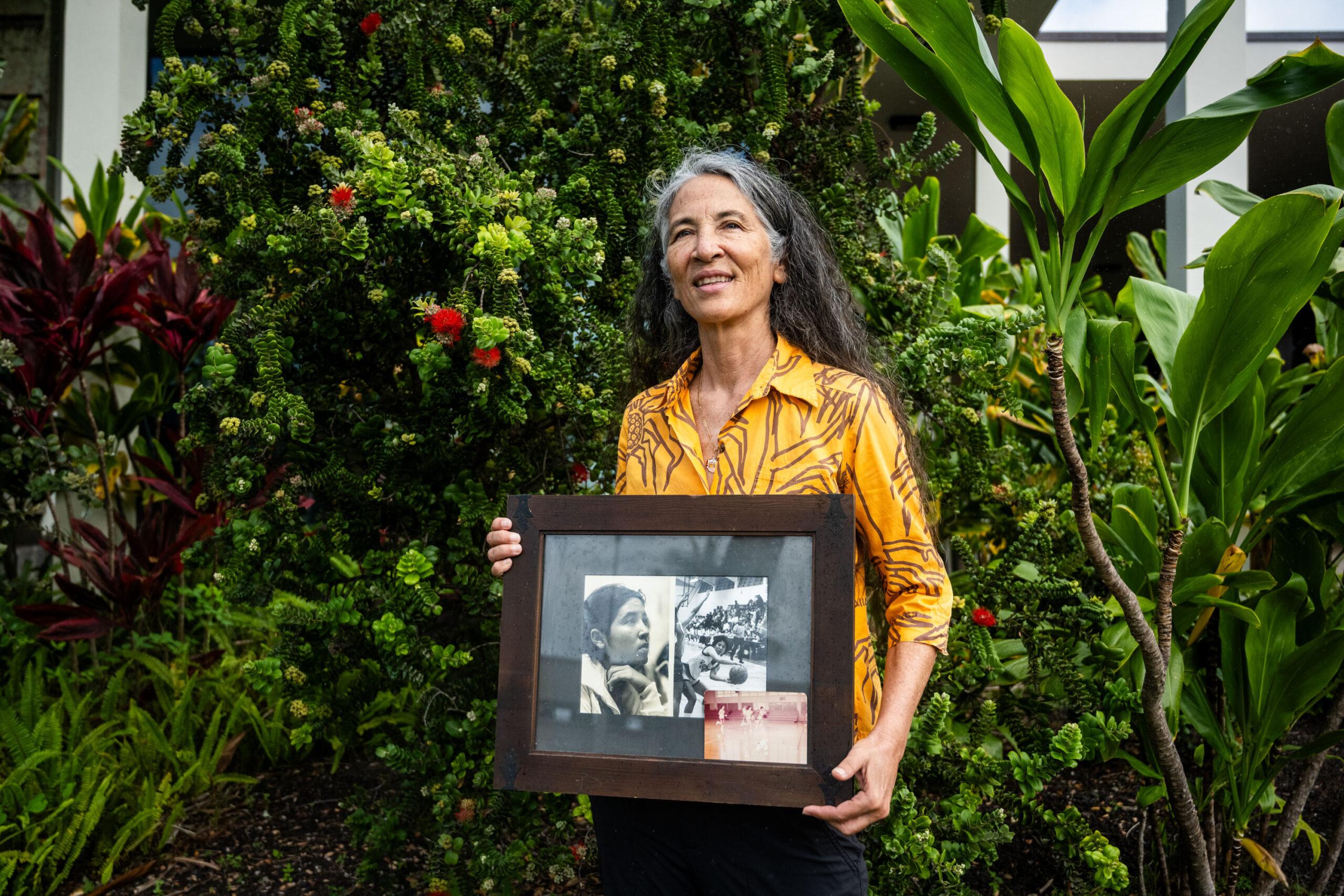
Passed in 2000, her Gender Equity in Athletics law required the DOE to collect data on school sports. It also established a commission to monitor progress and hold schools accountable. Instead of relying on girls, parents, and Title IX advocates to be watchdogs, it created a legal framework for accountability and enforcement.
This structural accountability would drive continual progress toward compliance. To Nunokawa’s chagrin, last-minute changes removed or softened the language in the bill relating to enforcement, eliminating any real consequences for breaking the law. Nonetheless, the commission provided the stewardship and oversight that helped prevent backsliding.
“It worked until a new superintendent fired the director of the DOE compliance office and eliminated the entire structure our commission put in place,” Nunokawa said.
Much like the chemical and tobacco industries stopped doing internal studies that generated evidence that their products were harmful, Hawaii’s DOE quietly stopped generating the data. Years later, that lack of data would weaken the DOE’s defense in the case against Campbell.
Frustrated after years of fighting with the DOE over Title IX compliance, Nunokawa had sought the advice of Dr. Donnis Thompson, the pioneering women’s athletics director who launched the first Title IX teams at the University of Hawaii and was determined to enforce the federal law. The women knew each other from Nunokawa’s days as a Rainbow Wahine basketball player.
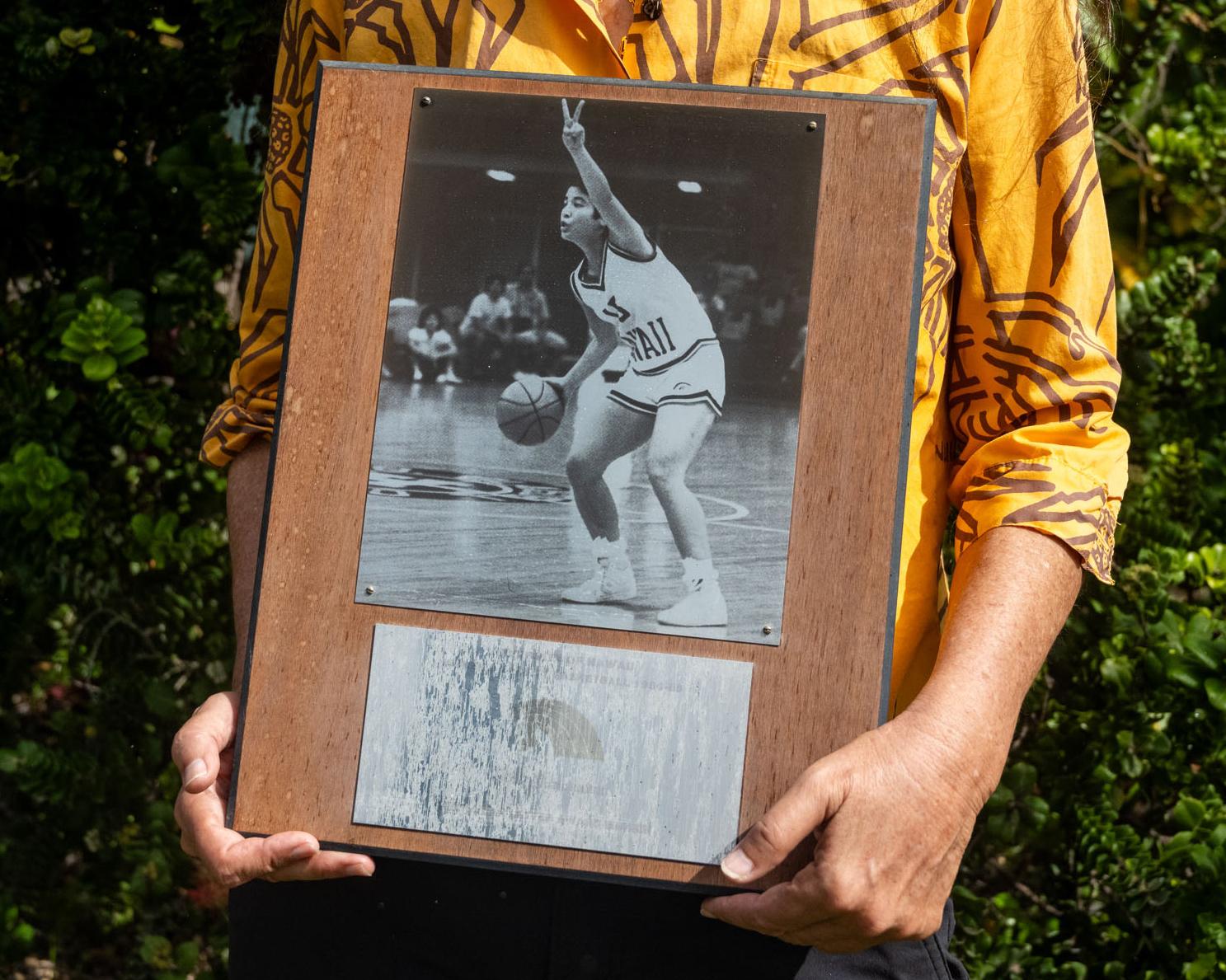
Thompson had spent years trying to compel DOE into compliance, from the outside and then from the inside, during three years as its first female superintendent.
“How do I work with the DOE?” Nunokawa recalls asking her old friend.
“You sue them,” Thompson replied.
It was the only option left. But Nunokawa ran into a different problem: She couldn’t find anyone brave enough to withstand the public scrutiny of a lawsuit.
Without a plaintiff, there could be no case.
“IF NOT US, THEN WHO?’’
Caron and Dom thought long and hard. Did they really want to be at the center of a legal battle?
At first, they didn’t think it was possible because they couldn’t afford a lawyer. But the ACLU explained that their work is pro bono: If they won the case, the defendants would pay the attorney fees. If they lost, the family wouldn’t be stuck with the bill.
The Badis family also fretted about retaliation. Ewa Beach, like most of Hawaii’s towns, is a small community. “Go along to get along” is a common refrain. Would Ashley’s peers snub her? Would teachers dock her grades? Would male athletes and their parents view her as an opponent or a traitor?
Lawsuits involving underage plaintiffs usually require lawyers to conceal the minors’ identities, naming them in court documents only by their initials. But in a place like Ewa Beach, everyone would know “A.B.,” the water polo player, was Ashley Badis.
Still, Ashley and her family felt that change had to happen. “If not us, then who?” they kept asking themselves.
They all felt strongly about not seeking damages. If they won the lawsuit, they didn’t want a dime. If other girls could benefit from this fight, it would be worth the personal cost. It was one of the essential lessons of sports: Take one for the team. Ashley agreed to be the plaintiff in a class-action lawsuit, and Troup agreed to be the coplaintiff.
Ashley’s lawyers gathered in Honolulu to file A.B. v. Hawaii DOE on Dec. 6, 2018 — Patsy Mink’s birthday. She would have been 91.
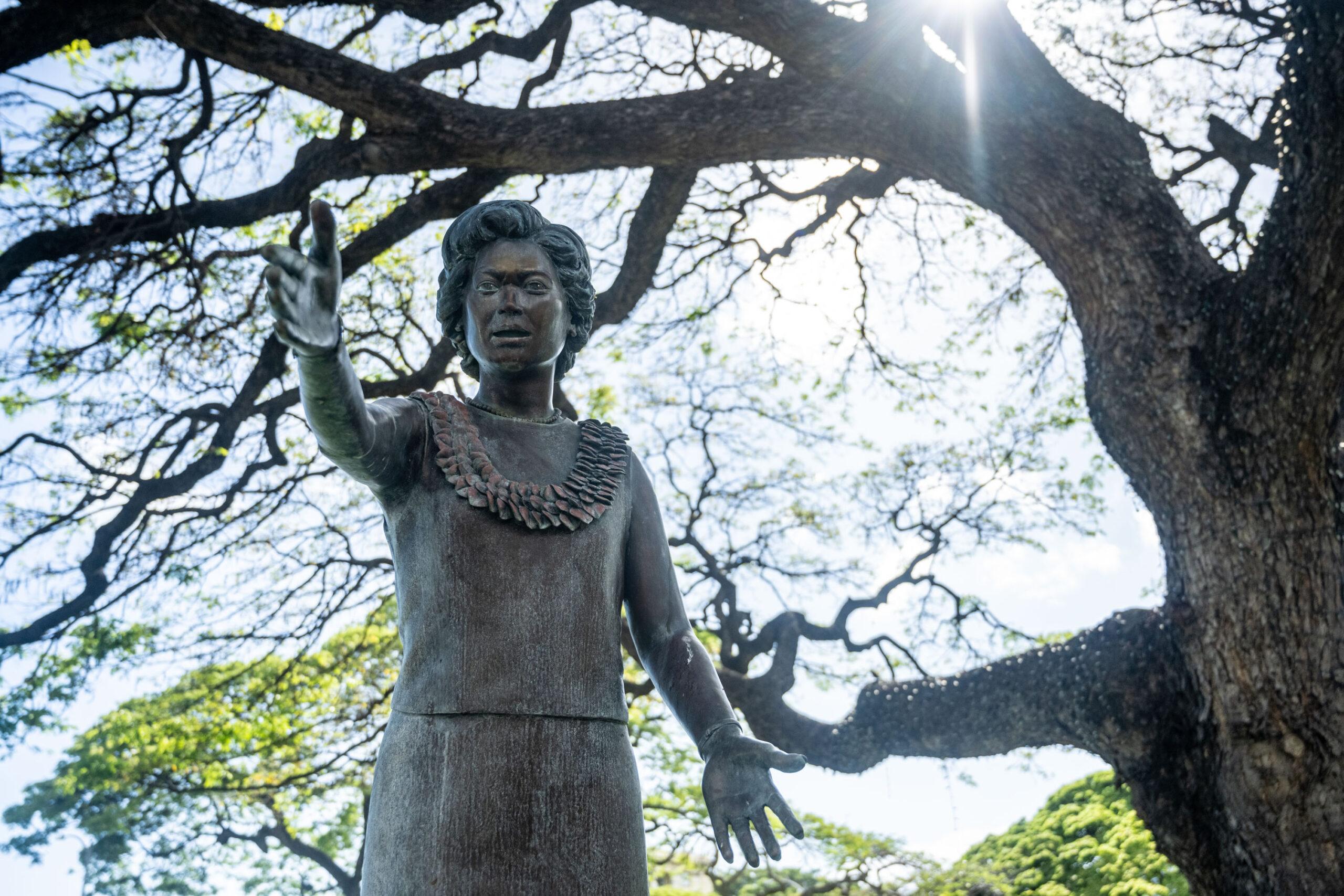
Patsy died from pneumonia in 2002, at age 75. To celebrate her legacy, the state erected a statue of her in downtown Honolulu. Cast in bronze, right arm outstretched, brow furrowed and lips parted, she looks like she is forever speaking out. “Life doesn’t have to be this unfair!” she once said. “I can’t change the past. But I can certainly help somebody else in the future so they don’t have to go through what I did.”
Head of the Class
Shortly after the lawsuit was filed, Hawaii’s governor announced plans to allocate $38.2 million for girls’ athletic locker rooms in high schools throughout the state. A Honolulu Star-Advertiser columnist called it “a welcome and, in the historical context, long overdue step forward addressing an enduring inequity in athletics.”
The governor’s gesture didn’t stop the lawsuit. Locker rooms were just one symptom of a system-wide disparity.
The Campbell water polo team posted a 4–7 record over the 2018 season, and Ashley and Troup continued to play into their senior year. Meanwhile, the ACLU recruited a legal team of franchise players. One of them, attorney Elizabeth Kristen, was a Title IX specialist from the California Women’s Law Center, an advocacy group experienced in this kind of litigation.
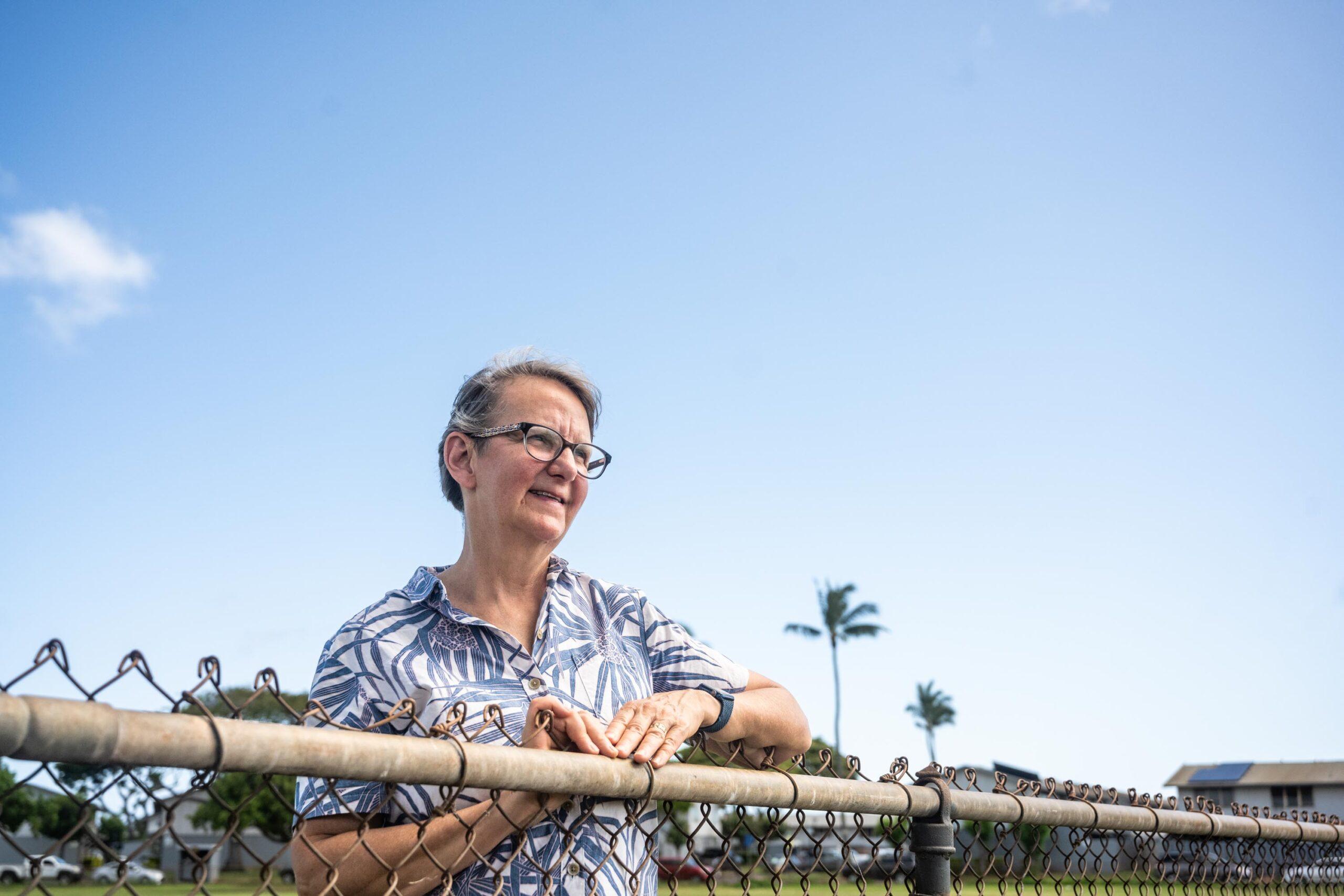
When Kristen was 7 years old, her mother, a single mom, went to law school. She was one of only 10 women in her class. In third grade, Kristen saw a flyer for basketball, and wanted to play. She had learned from her mom about Title IX, and wondered why she wasn’t allowed to participate. There was a boys’ league, but there wasn’t one for girls.
“With my mom’s advocacy, I played on the boys’ basketball team and later was on the girls’ team all four years of high school,” Kristen says. “Playing sports was an important part of my education and my training to fight for gender equity.”
Not all Title IX disputes are class actions, but all of Kristen’s have been. When it came to Ashley and Troup’s lawsuit, an individual case would only address the water polo team’s problems. A class action would look at issues that all female athletes at Campbell faced. It would ensure that any legal remedy would address systemic failures rather than individual grievances.
Kristen’s definition of “the class” was, like the language of Title IX, intentionally broad: “All present and future Campbell female students and potential students who participate, seek to participate, and/or are or were deterred from participating in athletics at Campbell.”
The DOE (which did not respond to multiple requests for comment) fought the case every step of the way. What might have been settled in a matter of weeks, as had been the outcome with the Title IX lawsuit brought by softball players on Maui, dragged on for years. First the DOE argued the class should be limited to the female student-athletes currently enrolled at Campbell. The District Court judge agreed, which meant the case could not proceed as a class action. Ashley’s lawyers appealed, and the Ninth Circuit overruled the District Court.
During an appeal, the DOE argued that alleged “retaliatory measures” against the water polo team — including inexplicably missing paperwork and threats to cancel the season — could not be a class-wide claim.
Kristen knew how to handle that. In a previous Title IX class action — Ollier v. Sweetwater Union High School District (2014) — she had set a legal precedent that retaliation against a handful of girls can cause class-wide harm by discouraging other girls from speaking up and exercising their legal rights.
At the appellate level, the DOE argued the retaliation claim was too narrow for class certification, but a Ninth Circuit judge demolished that argument. “The nature of retaliation, particularly in this situation, is that the first one who raises their head over the crowd gets it lopped off,” he said. “And it’s like: Anybody else want to try that?”
Another point of contention concerned the DOE’s codefendant, the Oahu Interscholastic Association (OIA), a governing body that oversees high school sports on Oahu. The OIA attempted to excuse itself from the lawsuit, arguing that it didn’t receive federal funds, and therefore was not accountable under Title IX.
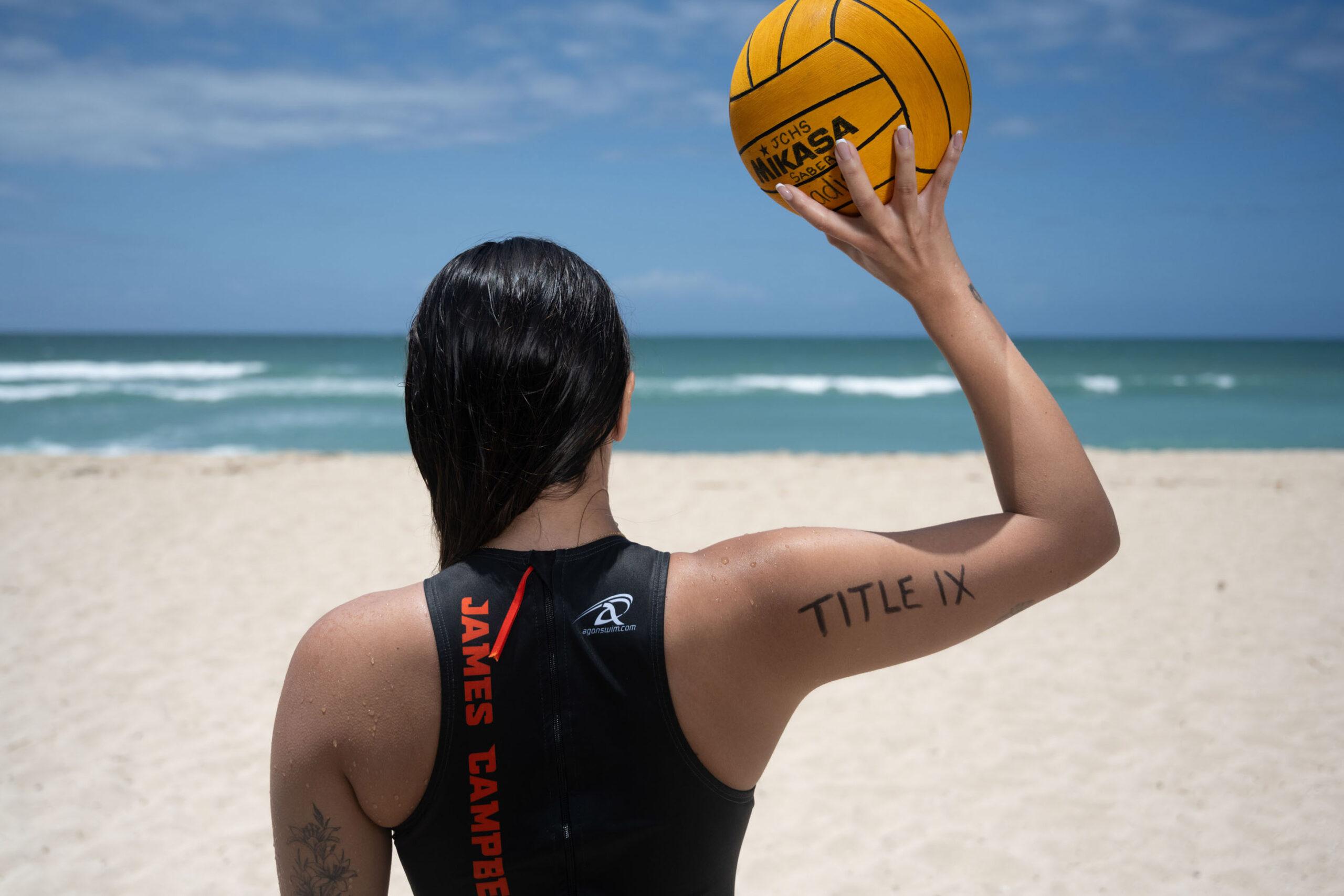
Ashley’s lawyers argued that the OIA was simply part of the DOE — employees even had DOE email addresses — and therefore benefited indirectly from any federal funding that went to the DOE. The District Court ruled in favor of the plaintiffs, setting a precedent that Title IX could be applied to other state athletic associations nationwide.
As Kristen had anticipated, the plaintiffs graduated before the lawsuit was resolved. After Ashley and Troup walked across the graduation stage in spring 2019, the defendants argued that the case was now moot; the girls were no longer in high school, no longer part of the class.
Again, the District Court disagreed. Ashley’s younger sister, Alexis, was now a sophomore at Campbell and a member of the water polo team. Speaking up didn’t come naturally to Alexis, but she agreed to be added as a named plaintiff to keep the lawsuit going.
Mothers and Daughters
The case inched along, repeatedly delayed by another new variable: denial of class certification, administrative hangups, the pandemic. In 2023, five years in, Ashley and the other Campbell families finally got word that they would have their day in court.
Now a 22-year-old college student at the University of Hawaii, Ashley was less shy, having learned the power of her story. Nevertheless, the thought of telling it on the witness stand was terrifying. Would it be like an episode of “Law & Order”? Would the DOE lawyers grill her?
For her deposition, Ashley sat at a table facing a panel of four male DOE lawyers. Caron sat in as a silent observer, projecting moral support. A female court reporter recorded the words as a DOE lawyer hammered Ashley about a seeming discrepancy in her written declaration.
“Though not all problems have been solved, we did see improvements this year…” one sentence read. Another: “My whole experience on the water polo team makes it feel like we are taking a huge step back.”
“I’m a little confused,” the lawyer said. “Which is it? Are there improvements? Or are you taking a step back?”
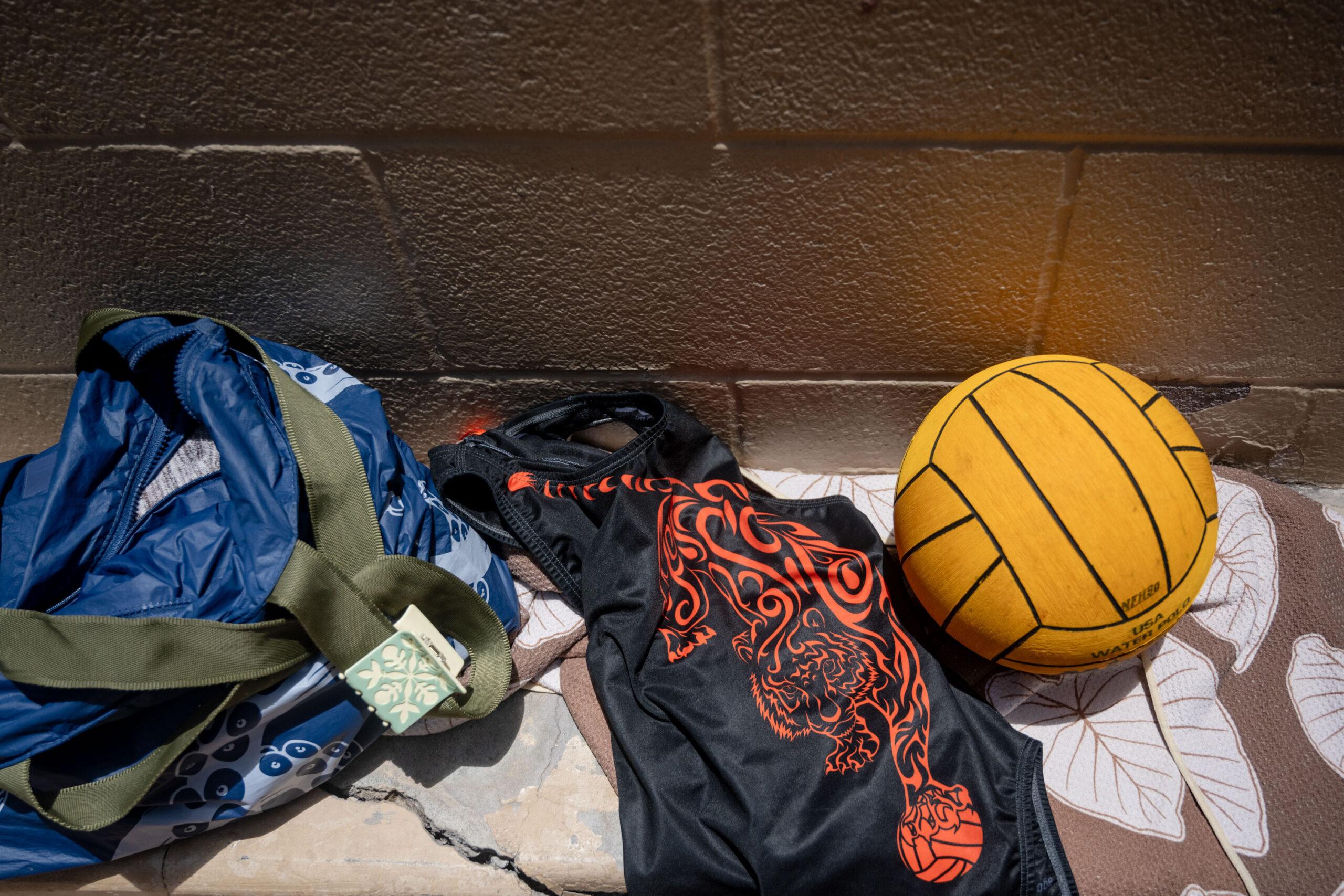
“My senior year, we had a pool on time,” Ashley said, beginning to cry. “But we are taking a step back in women’s rights. We have to fight so hard to get one little thing to be equal to the boys!”
Caron dabbed her eyes and saw the court reporter crying. It was painfully true, what her daughter said: There can be instances of progress even while the system is regressing.
Ahead of the trial date, both sides agreed to mediation. As a stroke of luck, the mediator was a retired female judge who had once worked for Patsy Mink.
Kristen flew to Hawaii to be there in person. As mediation began, she got an emergency call. Her mother was in the ICU, fading fast. Kristen called the hospital.
“The doctor says you’re dying,” she told her mom. “He says I should come home.”
“Absolutely not!” her mother replied. “The work you’re doing there is very important.”
During two days of mediation sessions, Caron and Dom were disappointed that not one representative from the DOE bothered to show up, leaving the matter to their lawyers. The ACLU lawyers, Kristen, and the rest of the team representing the plaintiffs pushed for system-wide change, mechanisms for increased transparency in the DOE’s operations, and Title IX educational training for all schools and all girls in Hawaii.
As they stood to leave, Dom was taken aback when the lawyer for the OIA reached out to shake his hand. “I have daughters,” the attorney said. “I understand and appreciate what you guys are doing.”
That evening, Kristen sat on the beach in Waikiki and wrote a letter to her mother, just in case this was goodbye. “I know that my work builds on what you wanted to accomplish and began in the 1960s and 1970s,” she wrote. “I will do what I can here to make things better for girls in Hawaii and make you (and Patsy Mink) proud.”
After signing the letter, Kristen went for a swim in the Pacific. When a sea turtle surfaced beside her, that’s when she knew her mom would pull through.
The settlement was approved by the court on March 5, 2024. The 17-year-old plaintiffs who had filed it were 24 years old.
Reverberations
The case was celebrated in the national news as one of the most significant Title IX cases in history, in large part because of the focus on high school, rather than collegiate, athletics. It’s a rare case in which a complaint against one school will help every high school in the state. And because Hawaii’s schools are overseen by the DOE — a central defendant — changes from the settlement will ripple across the state’s 47 public high schools. Also, because of key rulings on class certification and retaliation, A.B. v. Hawaii DOE has been cited in 88 cases and counting.
The settlement is uniquely structured to provide a framework for accountability and progress. It requires tracking of key Title IX metrics. Some experts have praised this framework as a model that other high schools could use. Others say it’s not a new idea; it simply reinstates the approach that was in place under Hawaii’s Gender Equity in Athletics law before its structural accountability was quietly eliminated in 2015.
In many civil rights cases, enforcement is neglected. This settlement is also unusual in that it requires continual monitoring by an independent evaluator for seven years. Philip Catanzano, a Boston-based education law specialist, spent 10 years as an enforcement officer at the federal OCR, so he knows that expanding opportunities for girls is easier said than done. “It’s hard to get the coaches, the equipment, and rules sorted out,” he says. “You need a solid foundation for a team to be sustainable.”
In an act of good faith, the DOE also created a new full-time position, a Title IX athletics specialist, and hired former Rainbow Wahine basketball player Dana Takahara-Dias. She could empathize with athletes, coaches, athletic directors, and Title IX compliance officials because she’d been in every role at some point in her life.
Takahara-Dias did a statewide survey to see what sports girls wanted to play. The 16,000 students who responded requested archery and boxing, but liability ruled those out. The next most popular request: flag football. It was the nation’s fastest-growing girls’ high school sport, an emerging avenue for college scholarships, and a slated event at the 2028 Summer Olympic Games in Los Angeles.
Working closely with the OIA, Takahara-Dias flew to each of Hawaii’s major islands to recruit athletes and rally schools. There was no legislative funding, so she hustled to find corporate sponsors and private donors. The Seattle Seahawks, Las Vegas Raiders, and Los Angeles Rams adopted Hawaii, hosting training clinics and donating funds to develop local talent. Community partners provided uniforms, soft helmets, balls, mouth guards, and other equipment. Barriers to entry were coming down.
In less than four months, with no government funding, Hawaii’s DOE and OIA launched the first new high school sport in 23 years — and more than 1,000 girls signed up to play on 46 new teams. Insiders point to Takahara-Dias as proof that good actors can and do exist within a government department that has a history of recalcitrance. “Sometimes,” she says, “it takes the young voices and the young people to kick-start us.”
In May 2025, ESPN Honolulu covered the first Hawaii flag football state championship. The Campbell Sabers entered the finals as underdogs, up against Leilehua, a public prep school.
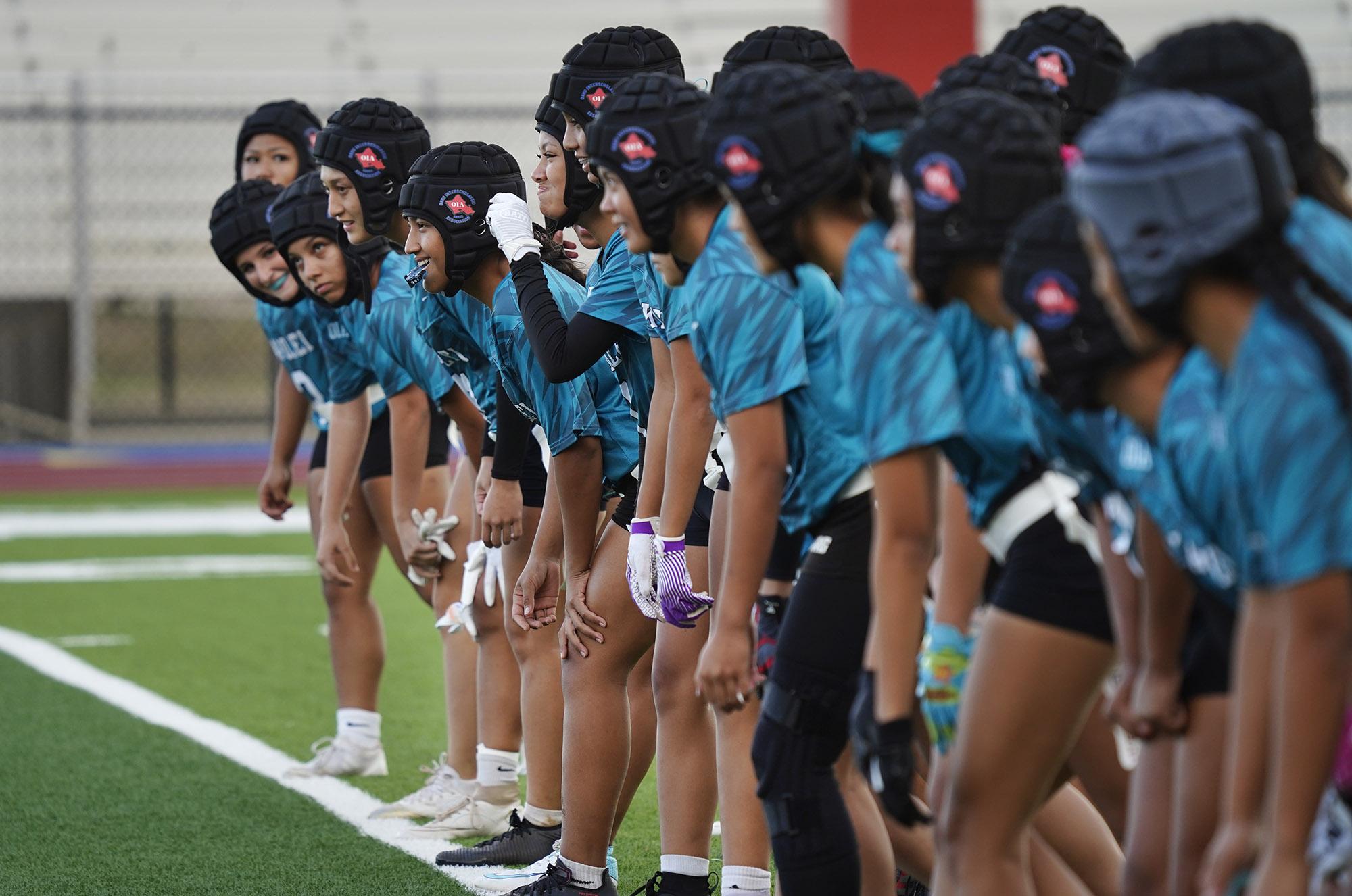
As a light rain fell, Campbell quarterback Maya Gonsalves took the snap, scanned the field for a pass, and saw no one open. Spotting a gap, she sprinted through it for a 33-yard touchdown, the winning play. Hawaii’s first state championship flag football trophy came to Ashley’s alma mater.
Sadly, there’s no longer a water polo team at Campbell. Last year, only one girl wanted to play for the school. This year, six expressed interest — still not enough to field a squad. They’re now playing on a composite team of students from various schools.
As part of their training, school administrators, including athletic directors, must watch a 45-minute video about Title IX. Student athletes must also watch a video about Title IX before every fall, winter, and spring sports season. Ashley and Caron insisted on that in the settlement, and it has the potential to be a bigger win than any championship game. In order for women to fight for their rights, they must first know what they are.
Fragile Victories
In July 2023, Ashley put on a sleek black halter dress, curled her hair, and checked her makeup. Behind one ear, her mother pinned a spray of Hawaiian flowers from her uncle’s garden. They were in Los Angeles for the ESPY Awards, the sports equivalent of the Oscars.
In front of more than 2 million ESPN viewers, Ashley accepted the Billie Jean King Youth Scholarship Award for her work on the Title IX lawsuit. Behind her, the floor-to-ceiling backdrop featured a photo of King, the legendary tennis player and champion for equity in sports.
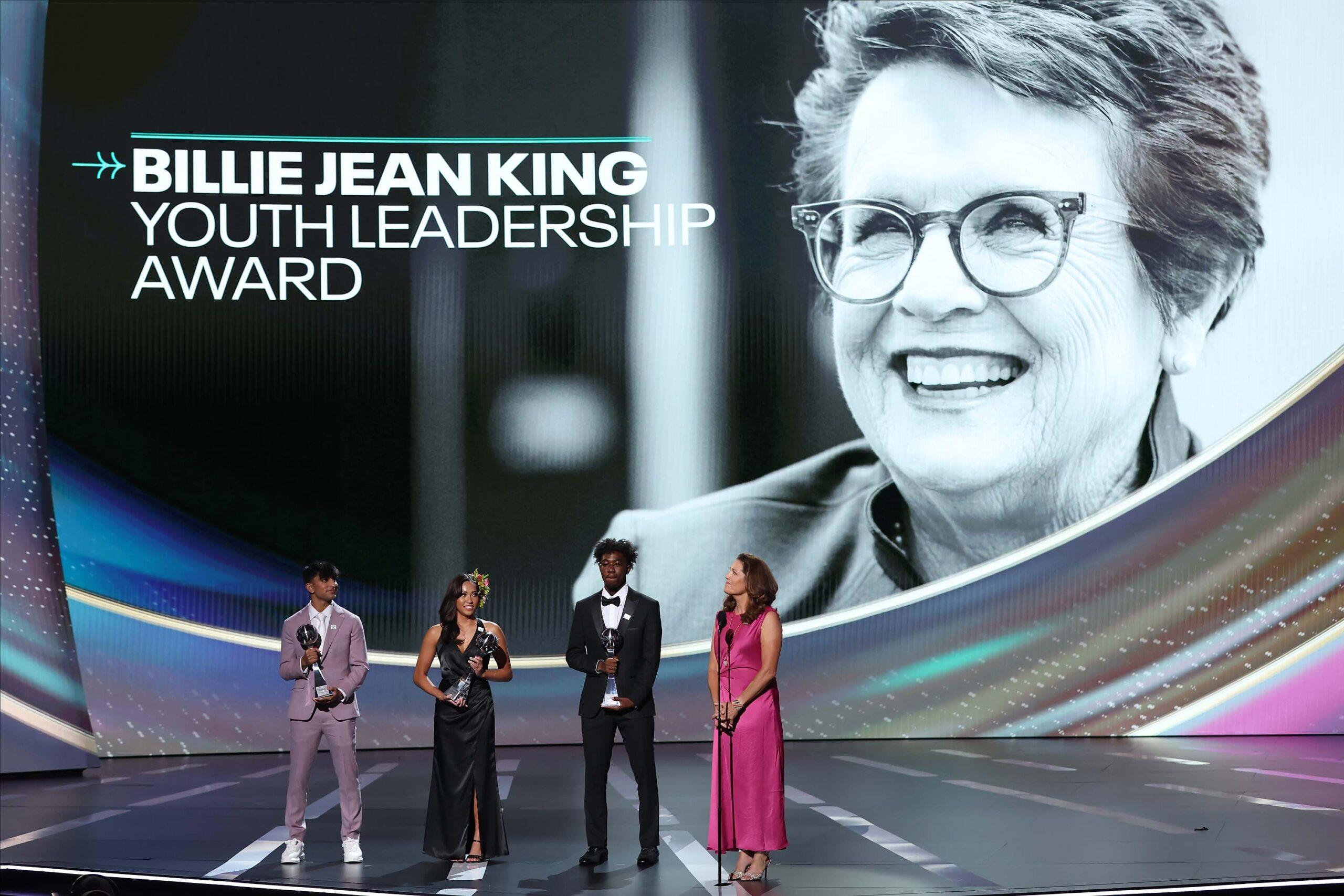
That’s when Ashley finally realized the magnitude of what she and the other girls had achieved. “It’s so, so important to speak up for yourself and for others,” she told Hawaii News Now the morning after the ESPYs. “You can’t invoke any change unless you start with the first step and speak up.”
Ashley went on to testify at legislative hearings, address ballrooms of adults in Washington, D.C., and speak at the release of the Patsy Takemoto Mink quarter in 2024. “Patsy Mink’s dedication to justice and equity inspired many, including myself,” she said. “She transformed countless lives through Title IX. However, there’s still more work to be done.”

Of the federal laws protecting women’s rights, Title IX has proved one of the most powerful and enduring. It was signed into law in June 1972, during the same 12-month period in which Congress sent the ERA to the states for ratification and the Supreme Court decided Roe v. Wade. Now, more than 50 years later, it’s the only one still standing.
But it is facing new attacks. After California Baptist University discontinued three men’s athletic teams in March 2026, the American Sports Council, an organization aiming to reform federal gender equity rules, filed a petition to rescind the 1979 Title IX regulations. That same month, men from those teams filed a lawsuit against their university, arguing that they’ve been discriminated against on the basis of sex.
“I think it’s going to be really seen as tone-deaf to suggest that women’s sports are somehow being advantaged over men’s sports,” Kristen told a reporter in March 2026.
Gender parity in sports has come a long way since the 1970s. Before Title IX was passed in 1972, only 7% of high school athletes were girls. Now they make up nearly 43%. In 1971, 294,000 girls played high school sports. Today the number is 3.5 million. Much of that growth is a result of legal pressure and a cultural shift toward inclusion. When you give girls a chance to play, they show up.
Participation rates fail to tell the full story about fairness, however. The boys’ basketball team gets a pep rally and boosters throw big steak dinners for the football team, whereas girls hold bake sales to buy uniforms, says Linda Mangel, former director of enforcement for the federal OCR.
“It just conditions girls to expect less,” she adds. “So when they get to the workplace and they make a little less, it’s just a subtle conditioning to expect less.”
Perhaps most unfair is that enforcement of Title IX falls largely on the shoulders of girls and parents. And in the wake of recent governmental changes, lawsuits may be the only realistic vehicle for timely enforcement. The Trump administration has gutted and redirected the OCR, which handles Title IX complaints.
In 2025, the OCR staff was reduced by half, and an executive order explicitly directed the remaining staff to prioritize punishing schools that allow transgender athletes to participate in women’s sports. Traditional athletics equity complaints have been sent to the back of a queue that’s getting longer and moving more slowly.
“That work has come to a near-complete standstill,” says Mangel, who resigned in March 2025 after the cuts incapacitated the OCR’s ability to function. “In the 14 months after the cuts, the OCR has resolved a single traditional athletics case. There are hundreds more sitting unresolved.”
Meanwhile, the Women’s Sports Foundation estimates that 80 to 90% of public high schools and colleges in the country are not in full compliance with Title IX’s athletic requirements.
What’s still missing? Consequences. The enforcement mechanism behind Title IX — the withdrawal of federal funding — has never been triggered. Not once. In more than half a century.
Instead, when an institution is found out of compliance, the OCR marks it “in compliance conditioned on remedying identified problems.” It is the exact problem Ashley described in her deposition: There can be instances of progress even while the system is regressing. But if those gains must be won through drawn-out lawsuits filed by student athletes, inequity will persist.
“THE GIRLS BEHIND US’’
One day in January 2026, Ashley and her parents went back to Campbell High for the first time in years. They’d heard about the new softball field, and they wanted to see it.
Standing behind home plate, looking through the chain-link fence, they admired the green artificial turf, the bright orange dirt combed neatly around the bases. There were new dugouts, right next to a brand-new bathroom built as part of the 2024 settlement.
The outfield of the softball field overlapped with that of the baseball field like a Venn diagram. On the other side of the field, a new locker room and athletic training center was under construction. It would have space for boys and girls.
The softball players were arriving for practice in updated uniforms. “They look so young,” Ashley thought. Dom turned to his daughter with a funny little smile and shining eyes, and she heard a catch in his voice when he spoke.
“That’s who we did it for.”
The young players giggled when they noticed strangers watching them through the fence. Someone waved them over. Naturally, they chatted about sports at Campbell and the new girls’ locker room.
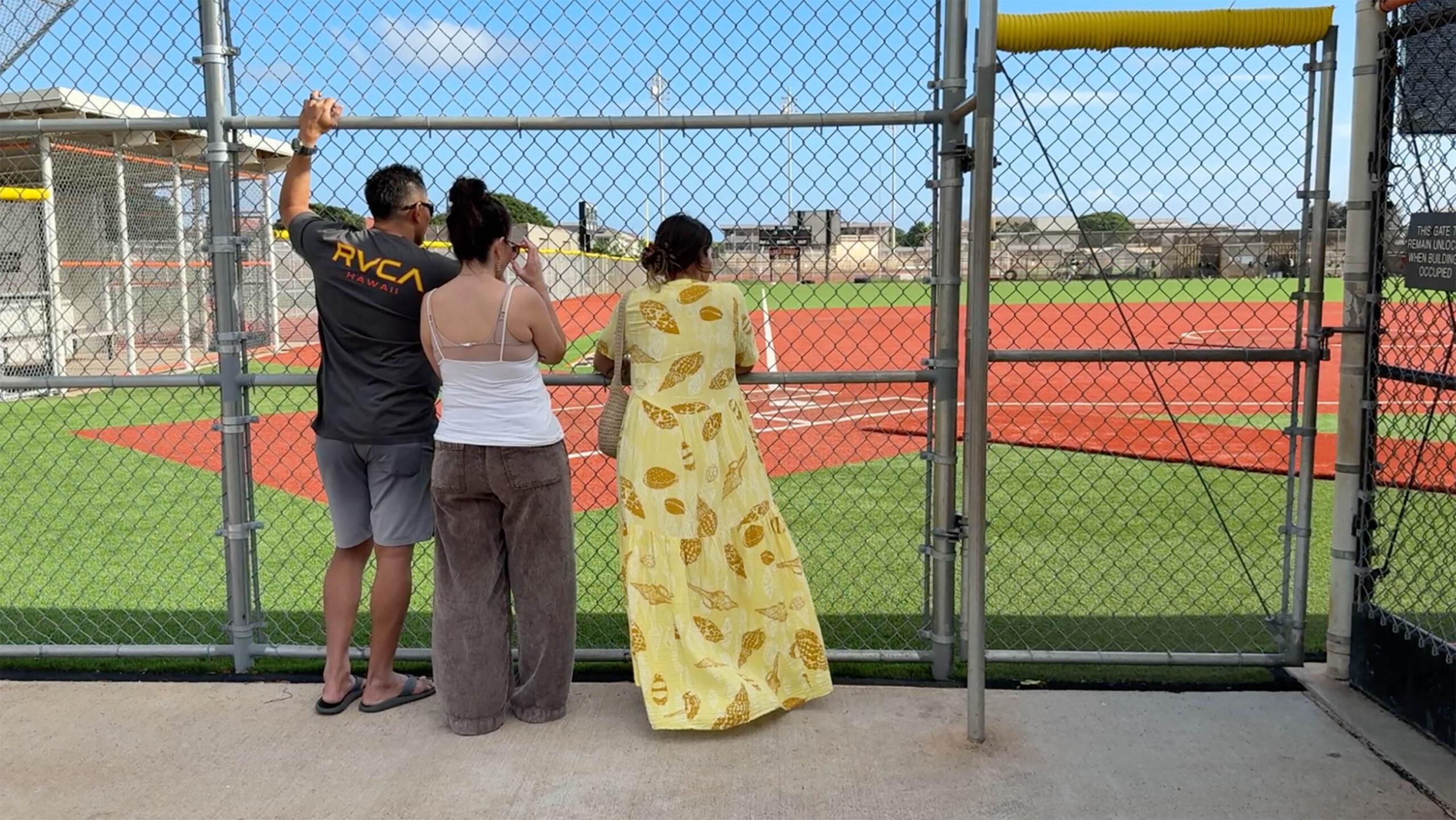
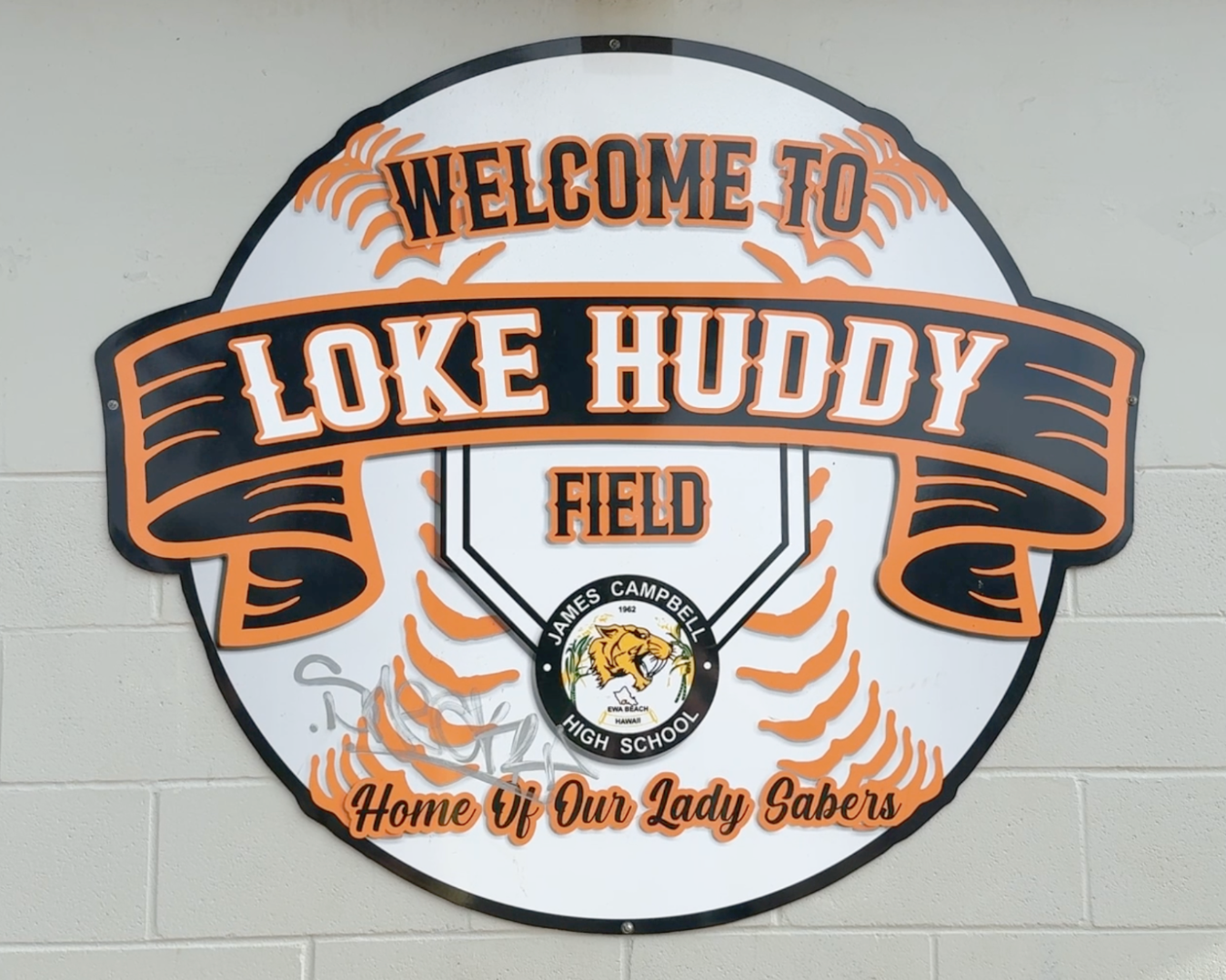
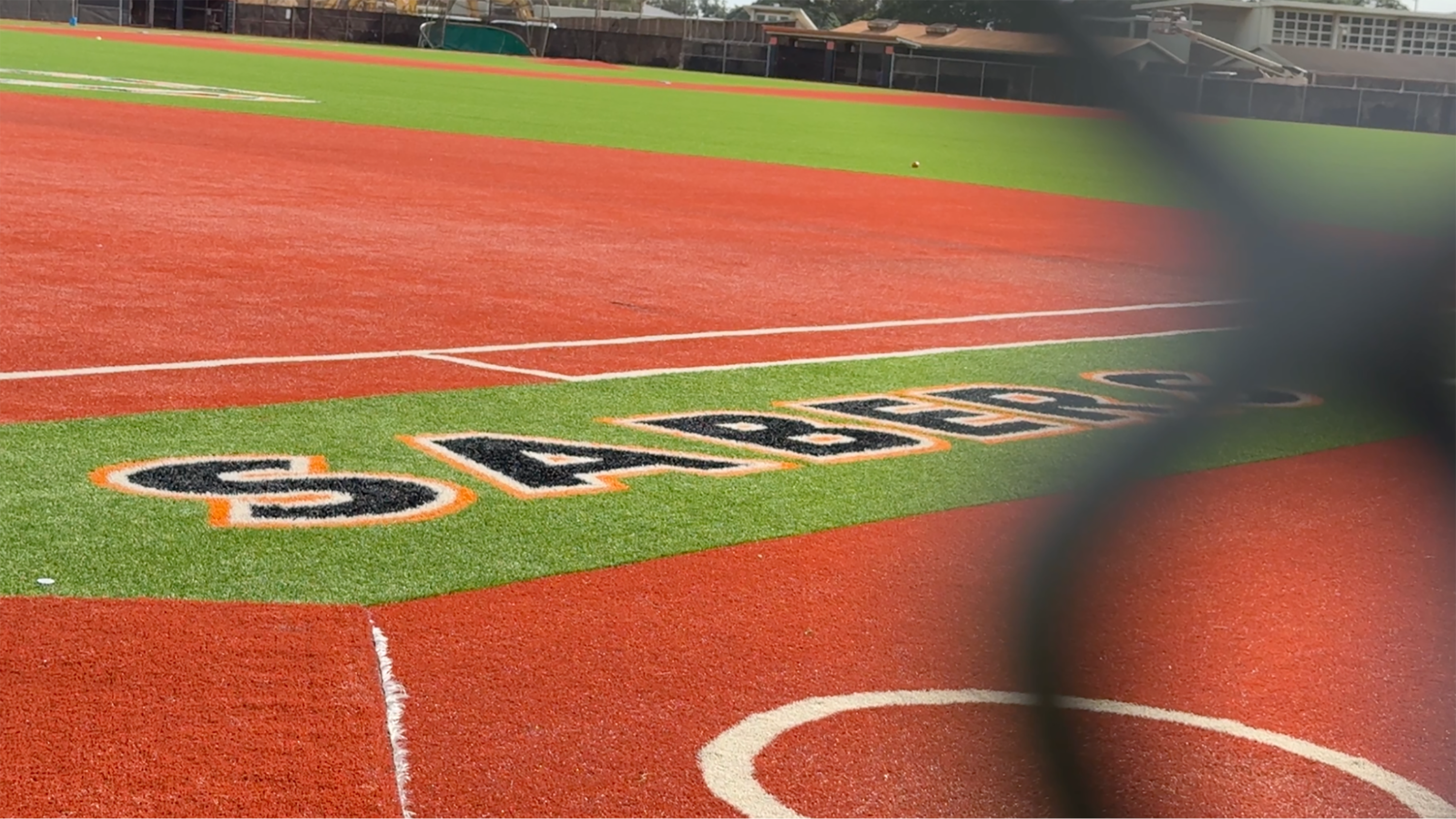
Did they know how these changes came to be? The softballers shook their heads. Ashley, not thrilled to be put on the spot but too gracious to brush people off, told a quick version of her story. “Cool. Awesome,” the girls said, understanding but not really understanding.
Before they turned and jogged back to practice, one of the players nodded at Ashley and in a soft voice said, “Gratitude.”

David Wolman